
Last updated November 21, 2026
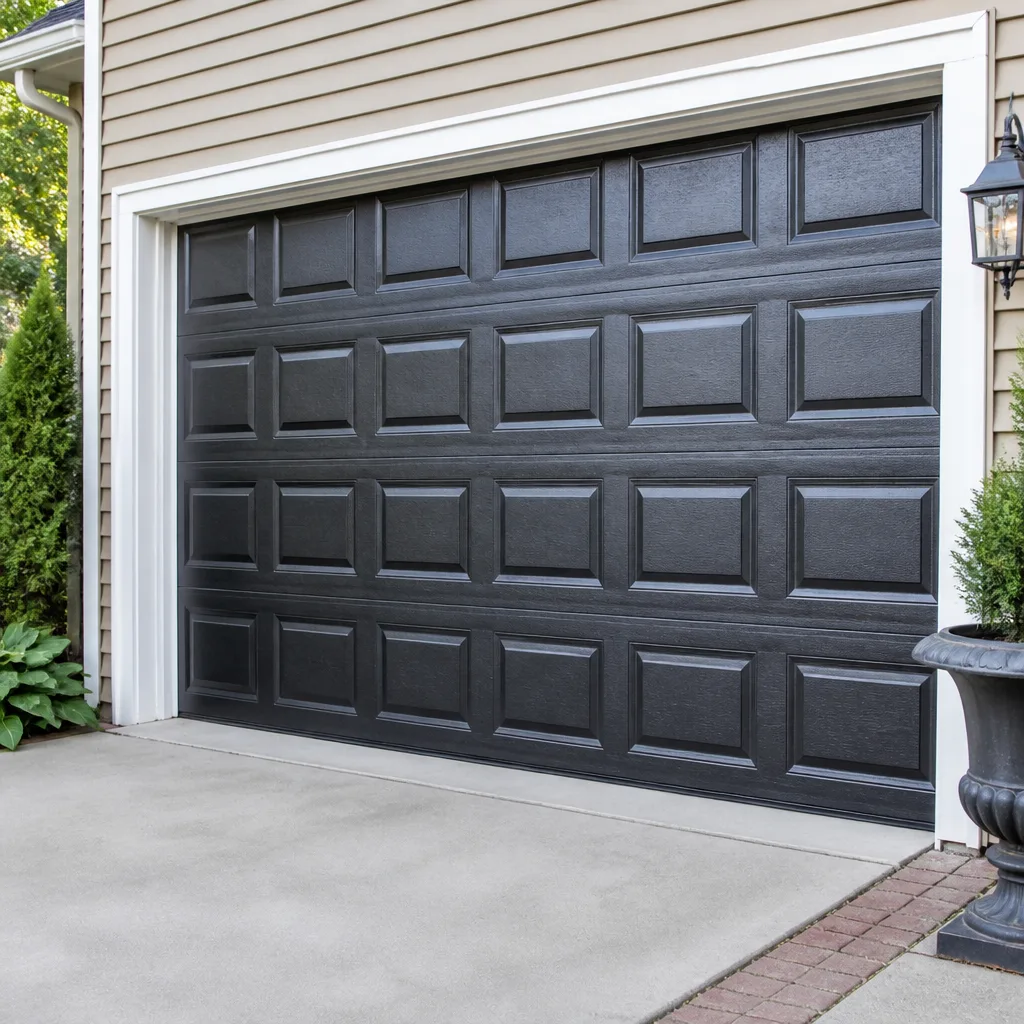 Raised-panel steel
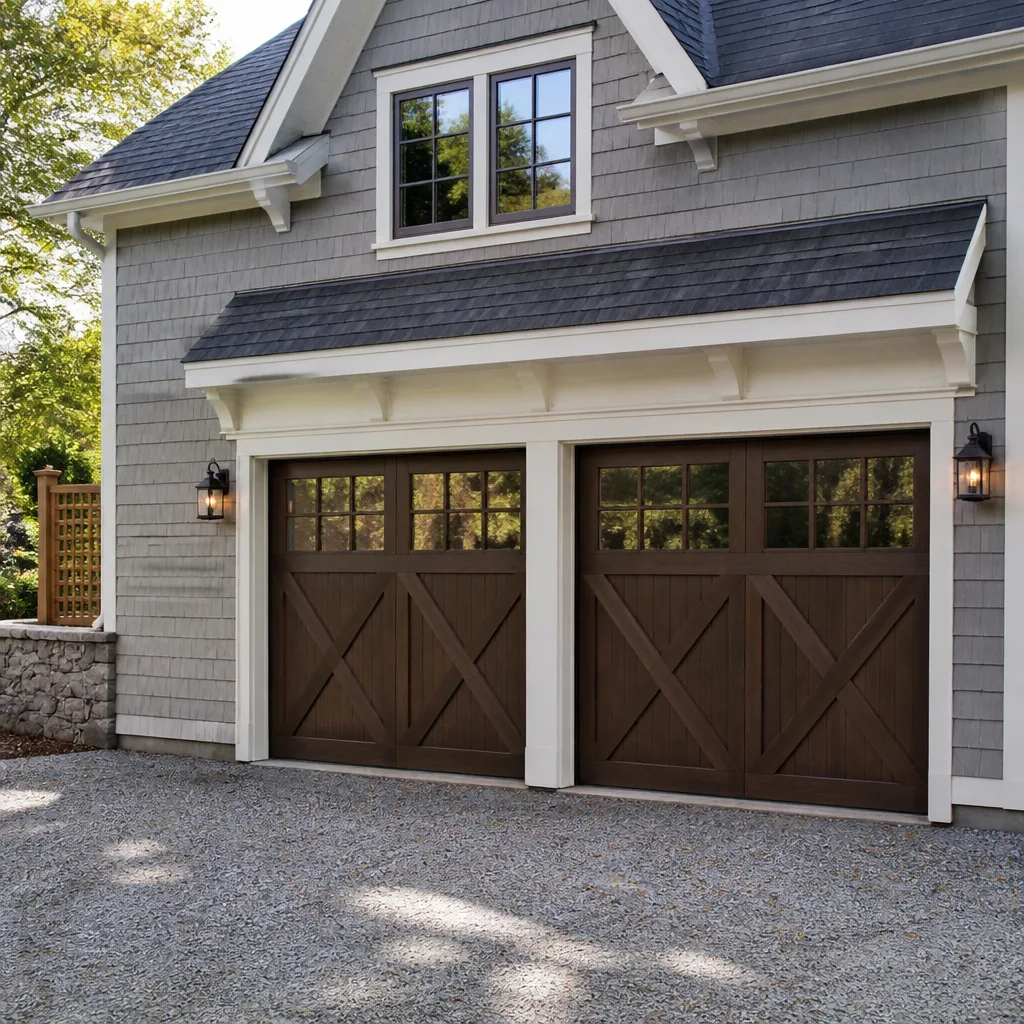 Carriage house
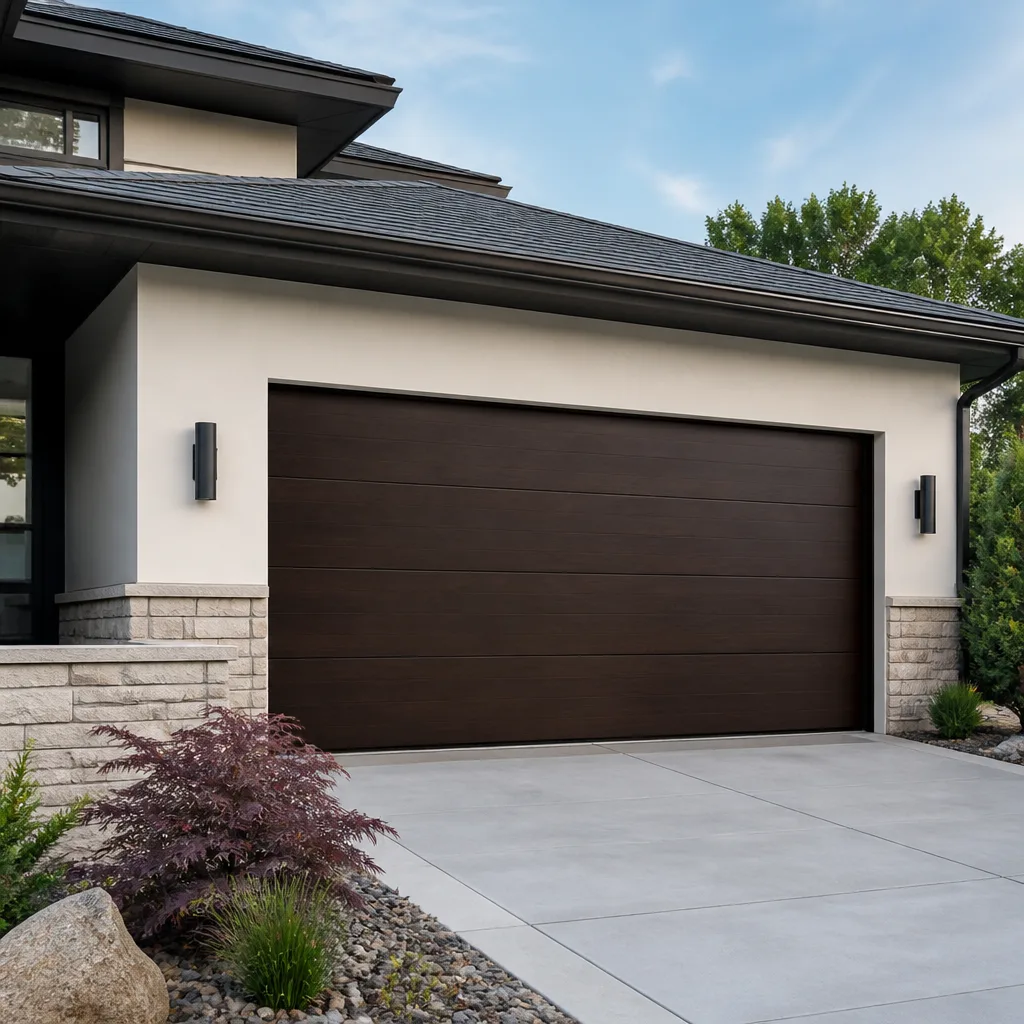 Modern flush
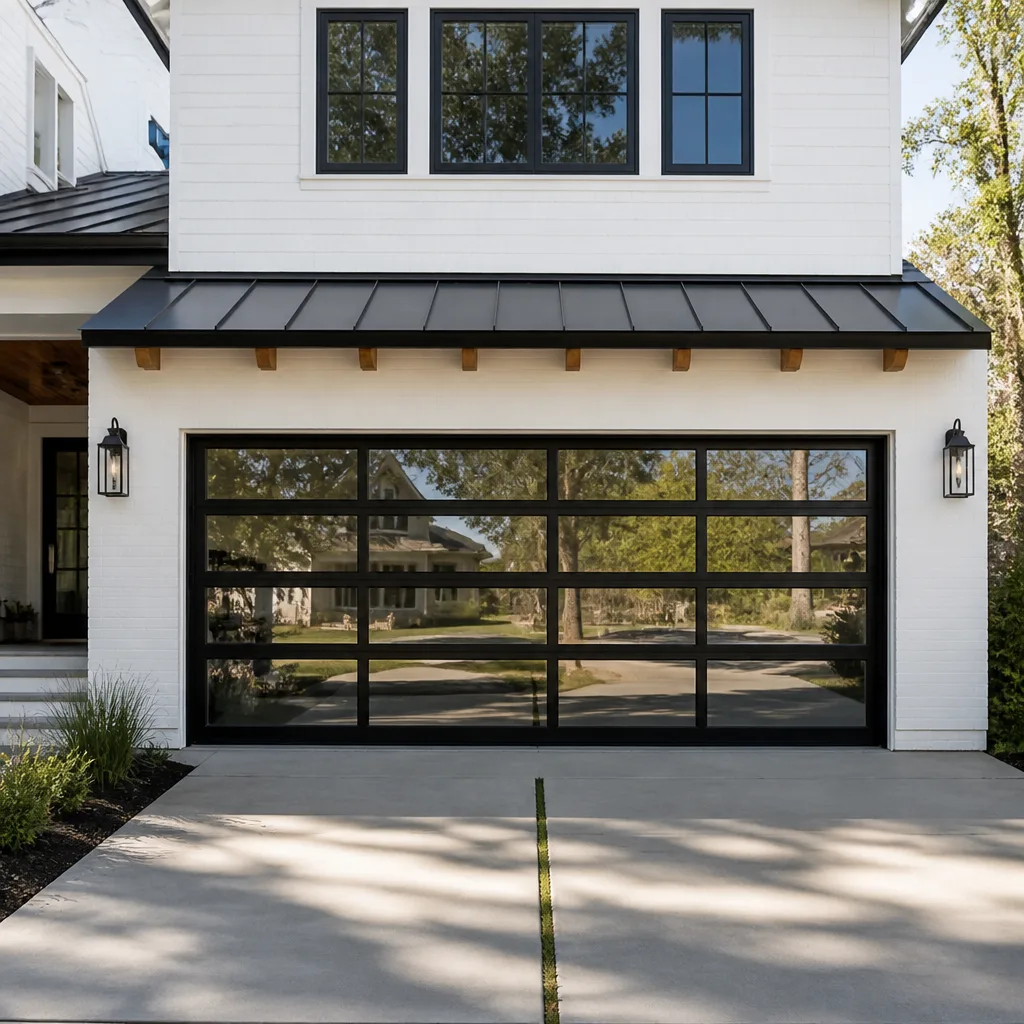 Full-view glass
 LiftMaster openers
 Chamberlain openers
Full 25-point door and opener safety check with every visit - springs, cables, rollers, tracks, and your LiftMaster or Chamberlain opener included
You get a price before we start. It does not change when the pro arrives.
Get your free estimateSeasonal Garage Door Care for Flatbush: Year-Round Homeowner’s Guide
The month most garage door springs fail in New York isn’t January. It’s March, when rapid temperature swings cycle metal through expansion and contraction faster than any deep freeze. Flatbush doesn’t get Minnesota winters or Phoenix heat, but its seasons stress a garage door in ways most generic maintenance guides miss: humidity swings near the water, urban freeze-thaw cycles underfoot, and summer heat radiating off asphalt. This guide walks you through what to check and when, season by season, based on how doors in this neighborhood actually wear. You’ll learn the specific products that hold up here and the maintenance that keeps a door moving quietly for years.
Quick Answer
Seasonal garage door care in Flatbush means adjusting to a mild-but-variable climate rather than extreme cold: lubricate moving metal parts with a cold-rated product before winter, replace the bottom seal and weatherstripping before the first freeze-thaw cycle, inspect torsion springs and cable drums every spring after winter stress, and check opener motor ventilation and panel condition through summer heat. Flatbush humidity makes wood composite panels a special concern because they absorb and release moisture differently than steel or fiberglass.
Styles & brands we work with
- Raised-panel steel
- Carriage house
- Modern flush
- Full-view glass
- LiftMaster openers
- Chamberlain openers
Table of Contents
- Why Flatbush’s climate is hard on garage doors
- Fall care: weatherstripping and seals before the freeze
- Winter care: lubricant selection that survives cold
- Spring inspection after winter stress
- Summer: opener ventilation and heat strain
- How humidity affects wood composite vs. steel and fiberglass
- A simple monthly check routine
- Why springs deserve professional attention
Why Flatbush’s Climate Is Hard on Garage Doors
Flatbush sits in a transitional climate zone that most seasonal guides flatten into “cold.” The real story is variability. Winters here bring repeated freeze-thaw cycles rather than a sustained deep freeze, and that back-and-forth does more damage to a garage door than a steady cold spell. Metal expands on a mild afternoon and contracts the same night, and every cycle works at the joints, fasteners, and spring steel a little more. A door that sees forty of these swings over a winter is being tested far more than one that stays frozen from December to March.
Summer brings the opposite problem, but it’s not just heat. It’s where the heat lands. In dense blocks of Flatbush, a west-facing garage door absorbs direct sun on dark metal and radiated warmth from adjacent asphalt, and panel surfaces can get much hotter than the air temperature around them. That heat stress shows up in panels that bow or warp and in opener motors that run harder than they should because the door is heavier and less free-moving than in cool weather.
And there’s the humidity. Flatbush’s proximity to water gives the neighborhood a moisture cycle that swings through the year, and that cycle is the quiet driver of some of the most expensive garage door damage we see: wood composite panels that take on water and swell, then dry and shrink, then take on water again. Steel and fiberglass handle the same air differently. Knowing which material you have tells you what to watch.
Fall Care: Weatherstripping and Seals Before the Freeze-Thaw Cycle
Fall is the single most valuable window for garage door maintenance in Flatbush, and it’s the one most homeowners skip. The goal is to seal the door before the first freeze-thaw cycle, because a door that leaks cold air and moisture through worn seals puts more strain on everything above it. The bottom seal and the perimeter weatherstripping are your first line of defense, and both degrade faster on urban pavement than on clean suburban concrete.
Here’s what to do before the cold settles in:
- Run your hand along the bottom of the closed door. You should feel firm contact with the floor along the full width. Gaps, tears, or a seal that’s flattened to the point of crumbling mean it’s time to replace the bottom seal.
- Check the perimeter weatherstripping on both sides and across the top. Look for cracking, gaps at the corners, or strips that have pulled away from the frame.
- For an urban setting, choose a seal that stands up to grit and pavement rather than a soft sponge type that tears easily. A closed-cell rubber or vinyl bottom seal flexes with the door and resists abrasion better on concrete and pavement.
- Look at the threshold where the door meets the ground. Ponding water at the threshold after a fall rain is a sign the seal isn’t seating.
- Test the door’s balance by disconnecting the opener and lifting it halfway. It should hold there. A door that drifts down is telling you the springs are already tired and will work harder all winter.
Seals are cheap and quick compared to the problems they prevent. A door that closes tight keeps out cold air, moisture, and the small animals that look for shelter once the temperatures drop. If your seals are past saving, a technician can match the right material to your door type, whether it’s a Clopay steel door or an Amarr composite.
Winter Care: Lubricant Selection That Survives the Cold
The most common garage door maintenance mistake in winter is using the wrong lubricant. A spray that works fine in July can turn gummy or freeze outright when the temperature drops, and then it does more harm than no lubricant at all. The classic example is standard WD-40, which is a water-displacement solvent, not a true cold-weather lubricant. It cleans and protects against rust, but as a sliding lubricant on hinges, rollers, and tracks it doesn’t hold up in cold weather the way a purpose-made product does. In a Flatbush winter, you want a lubricant that stays fluid across temperature swings.
Pick a cold-rated product and know what it’s for:
- White lithium grease works well on metal-to-metal contact points like hinge pivots and roller stems. It resists moisture and stays put.
- Silicone spray is the right call for tracks and for the rollers themselves, because it doesn’t attract dust and grit the way heavier greases can.
- Avoid the wrong product entirely. WD-40 as a general-purpose spray and any lubricant not rated for cold temperatures can thicken and cause the door to bind.
Lubrication isn’t just about smooth operation. A door that binds because the metal is fighting a stiff lubricant pulls harder on the opener motor, and that added strain is where winter opener failures begin. A quick, correct lubrication routine before the cold sets in goes a long way in Flatbush, where the temperature dances around freezing all season. Once winter is underway, listen to the door. A door that gets louder as it gets colder is telling you the metal is dry or the lubricant has thickened.
Spring Inspection After Winter Stress
Spring is when hidden winter damage shows itself, and it’s also when the most garage door springs fail in New York. The reason is temperature cycling. January holds a fairly steady cold, but March swings from afternoon warmth to overnight cold and back again, expanding and contracting spring steel and fasteners faster than any deep freeze. So the first warm-up of the year is the time to inspect, not the time to relax. These checks are what to look for, not a how-to for working on them yourself.
After a New York winter, check the following:
- Torsion springs: Look for visible gaps or a clear break in the coil, and check the winding and anchor points for looseness. A door that won’t lift or feels unusually heavy is a warning sign.
- Cable drums: Cables should be wound evenly around the drum. A cable that’s off-track, frayed, or wrapped unevenly means the drum or cable needs attention.
- Rollers: Worn, flat-spotted, or cracked rollers are common after a winter of cycling. They should roll smoothly, not drag.
- Hinges and fasteners: Check for loose bolts and rivets that worked their way loose through the expansion and contraction cycles.
- Panels and alignment: A door that looks slightly out of square or rubs against one side of the frame may have shifted through the winter.
Torsion springs and the cables under tension are the most dangerous parts of a garage door system, and they’re the ones amateurs should never touch. Store-bought springs and extension springs are one thing, but a torsion spring is under tremendous stored tension, and if it lets go while someone is adjusting it, the injury can be severe. When a spring looks suspect, call someone trained for it. Our spring repair service exists precisely because this is the most technically demanding, safety-critical repair in the trade.
Summer: Opener Ventilation and Heat Strain
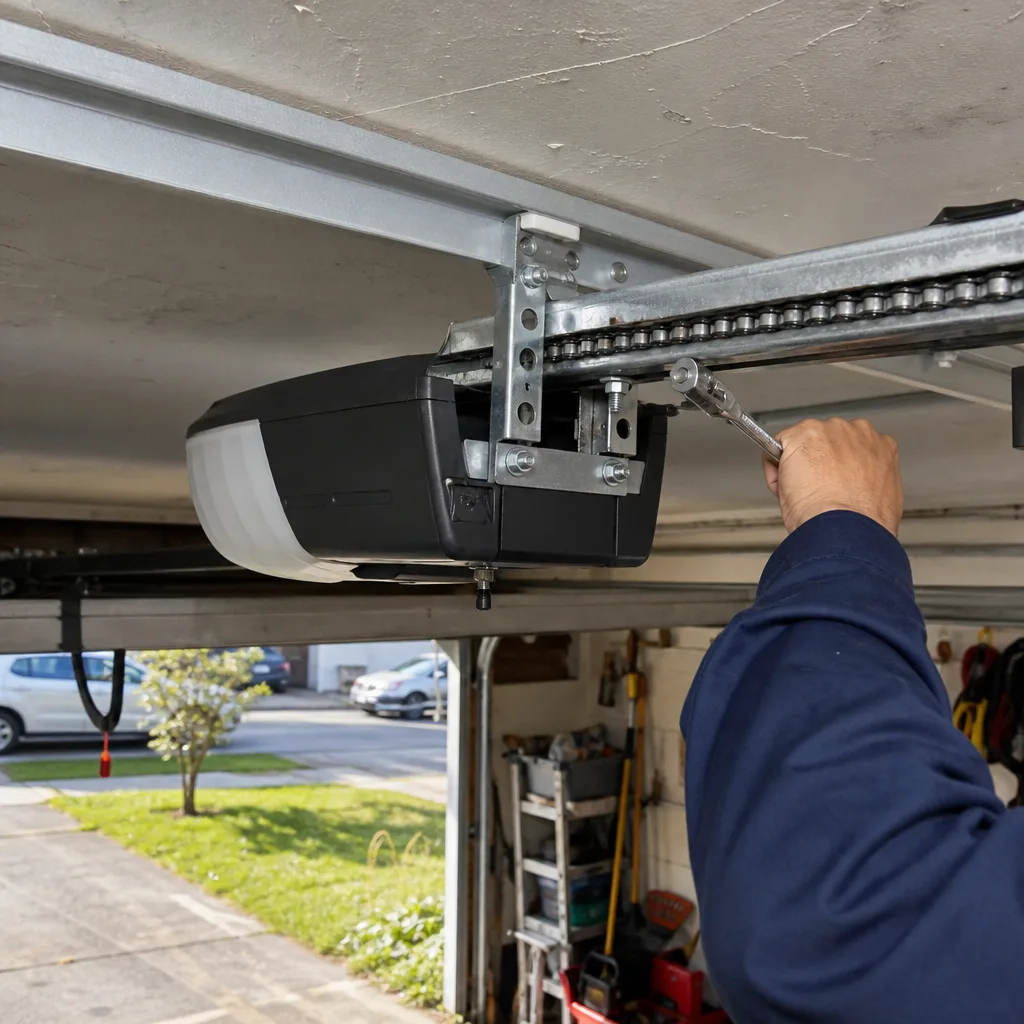
Summer in Flatbush puts a different kind of stress on your system, and it starts at the opener motor. The motor lives in the garage, which in summer can be the hottest space in the house, and it needs air to shed the heat it generates while lifting the door. If the space around the opener is stuffed with storage or the unit is boxed in, the motor runs hotter and works harder. Clearing ventilation around the opener is a simple summer task that prolongs motor life, and it’s the kind of specific issue we look at first when we’re called about an opener that’s acting tired in summer.
Then there’s the door itself. A dark metal door in direct sun absorbs heat and its panels can expand and bow, and a door that’s no longer flat has a harder time moving smoothly on its tracks. That extra resistance translates into more work for the opener, which is why summer opener strain often traces back to the door, not the operator. If you have a dark-colored door facing the sun through the afternoon, watch for:
- Panel bowing or waviness, especially on long panels
- The door binding on one side as it travels
- The opener straining or sounding labored on hot afternoons but fine in the morning
- Rubbing sounds as the door cycles, which suggest the heat is distorting alignment
Brand-specific matters here. The travel limits and force settings on a LiftMaster or Chamberlain opener are adjustable, and dialing them in for a door that’s running heavier in heat is a real fix, not a guess. In our experience, summer opener troubleshooting goes fastest when the technician knows the brand and its actual hardware.
How Humidity Affects Wood Composite vs. Steel and Fiberglass Panels
Flatbush’s proximity to water gives the area a moisture cycle that affects panel materials very differently, and most seasonal guides ignore it entirely. The short version: wood composite panels absorb and release moisture and can swell and warp, steel panels handle it best but can rust where moisture sits, and fiberglass panels generally resist it well but can crack under impact. Knowing which you have tells you what to watch for through the humid months.
Wood composite is the most humidity-sensitive material. Composite panels can take on moisture at the edges and seams, swell, and then shrink back as things dry, and repeated cycles lead to cracking or delamination. That’s why we look closely at panel edges and the bottom rail on composite doors during a humid stretch. Keeping a good bottom seal and perimeter weatherstripping in place reduces how much moisture reaches those edges.
Steel handles moisture far better, but not perfectly. The weak points are bottom rails, panel seams, and any spot where the paint film has been damaged. A chip in the finish lets moisture in, and rust starts underneath. A quick touch-up on any painted steel door is a cheap habit that prevents a bigger repair later, so keep a small can of matching touch-up paint on hand for a door that lives in Flatbush’s humid air.
Fiberglass resists moisture well and holds up in humid conditions, but it’s brittle under impact and direct sun can fade and eventually crack the surface. A fiberglass door that sees a lot of afternoon sun should be cleaned and checked for surface cracking through the summer.
Whatever your panel material, the real work of managing humidity comes down to the same idea: keep the door sealed and the finish intact. A Wayne Dalton composite and a Craftsman steel door both stay healthy when water can’t find a way in.
A Simple Monthly Check Routine
A full seasonal overhaul twice a year is useful, but the small monthly checks between them are what catch problems early, and they take about ten minutes. The idea isn’t to perform any repair yourself, especially around springs and cables. It’s to notice what’s changing so you know when to book a professional.
- Look and listen: Open and close the door while you watch and listen. A grinding, squeaking, or scraping sound is a signal something needs attention.
- Watch the balance: With the opener disconnected, lift the door halfway. It should stay put. If it drops, the springs are losing tension.
- Check the safety reverse: Place a small object in the door’s path, or use the test if your opener has one, and confirm the door reverses on contact. This is basic safety, and it’s worth checking every month.
- Inspect the seals visually: Glance at the bottom and perimeter seals through a cycle. Gaps or tears get worse if left.
- Clear the space around the opener: Keep the motor area free of stored boxes so it can shed heat in summer and run clean year-round.
- Note any new noise or change in speed: If the door starts to feel heavier or slower, write down when it happens. You’ll be able to tell a technician exactly what you noticed, which saves diagnostic time on the visit.
If any of these checks turns up something that sounds like a mechanical problem, that’s the moment to bring in a specialist. Book a visit today and one of our technicians can go through the door top to bottom, opener included, so problems get caught while they’re still small.
Why Springs Deserve Professional Attention
Springs are the heart of a garage door system and the one component where DIY is genuinely dangerous. Torsion springs, and the cables running over the drums, are under enormous stored tension. When they fail, they can let go with a violent snap, and someone in the wrong place at the wrong time can be seriously hurt. That’s why spring repair is a specialty rather than something a generalist should attempt, and why we treat it as a separate, dedicated service rather than a line item on a repair list.
Springs fail for a reason, and the season tells you a lot about why. March failures trace back to the temperature swings that work metal through countless expansion and contraction cycles. Summer failures often follow heat that distorts the door and loads the springs unevenly. Fall failures can follow a season of a door running with dried or stiff lubricant that turned the springs into the hardest-working part of the system.
A healthy spring lasts through an expected number of open-and-close cycles, and heavy use shortens that life. Households that open the door several times a day wear through their springs faster, which is one reason a monthly listen matters. If you hear a loud bang from the garage and the door suddenly won’t lift, or one side feels much heavier than before, stop operating the door and call for help. Don’t try to wind, replace, or adjust a torsion spring yourself. The professional who does it has the tools and the training for a reason.
Common Mistakes to Avoid
- Using WD-40 as a winter lubricant. It’s a water-displacement product, not a cold-rated sliding lubricant, and a door greased with the wrong product binds up when the temperature drops. Stick to white lithium grease on hinges and silicone on tracks and rollers.
- Ignoring the bottom seal until it’s torn. In Flatbush, a worn bottom seal is the biggest single cause of cold air and moisture getting into the garage, and once winter hits it’s harder to fix. Replace it in the fall before the freeze.
- Assuming a mild spring means the winter did no harm. The first warm-up is when hidden spring and cable damage shows itself. Inspect in spring, don’t wait for the door to scream.
- Testing or replacing a torsion spring without training. These springs are under extreme tension, and getting it wrong can cause serious injury. If a spring looks suspect, call a professional rather than reaching for a wrench.
- Packing storage against the opener. A motor boxed in with boxes can’t shed heat, and in summer that strain contributes to opener failures. Keep the motor area clear.
- Forgetting the finish on steel doors. Flatbush humidity finds every chip in the paint film and starts rust underneath. Touch up chips while they’re small, before they’re a repair.
- Jumping straight to a new opener when the door is the problem. A door running heavy in summer heat makes the opener strain. Check the door’s alignment and weight first, and if the opener is still the issue, make sure whoever services it knows the brand.
See the difference
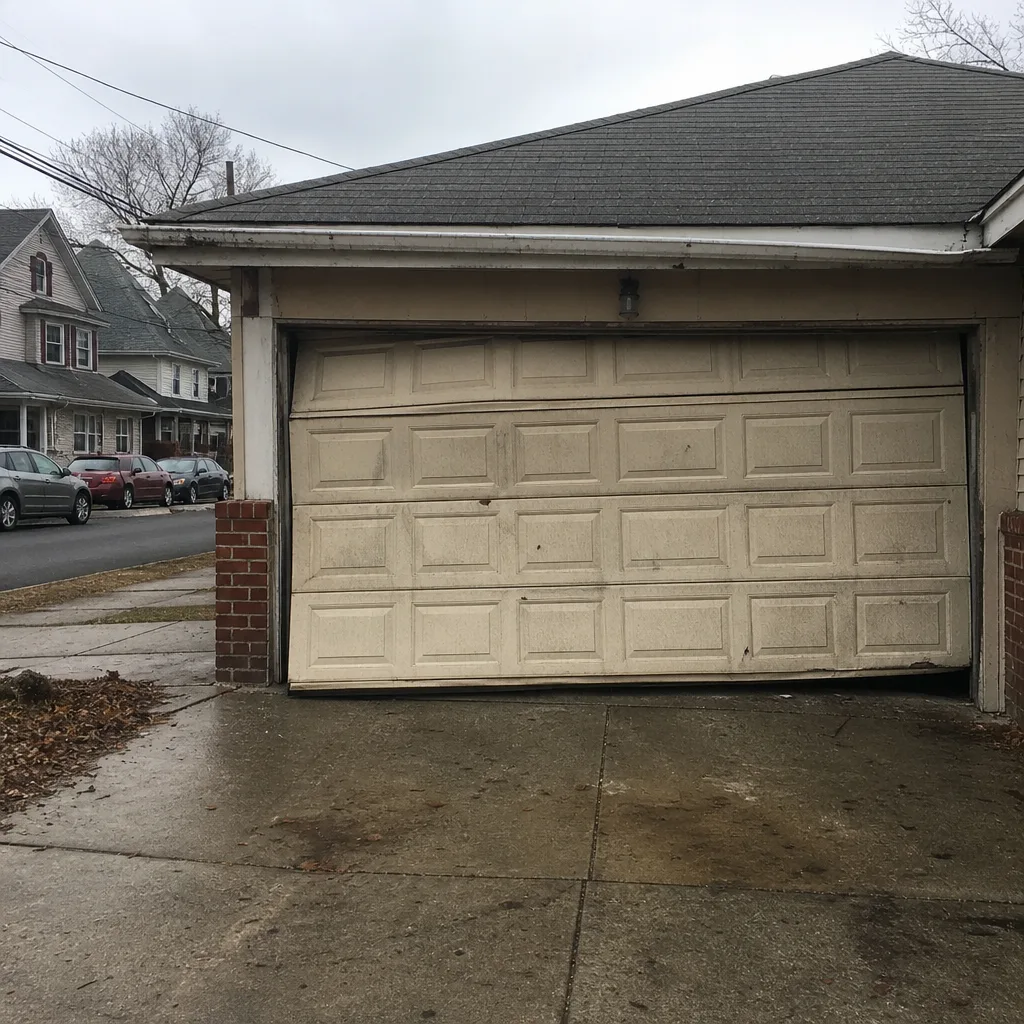 Before
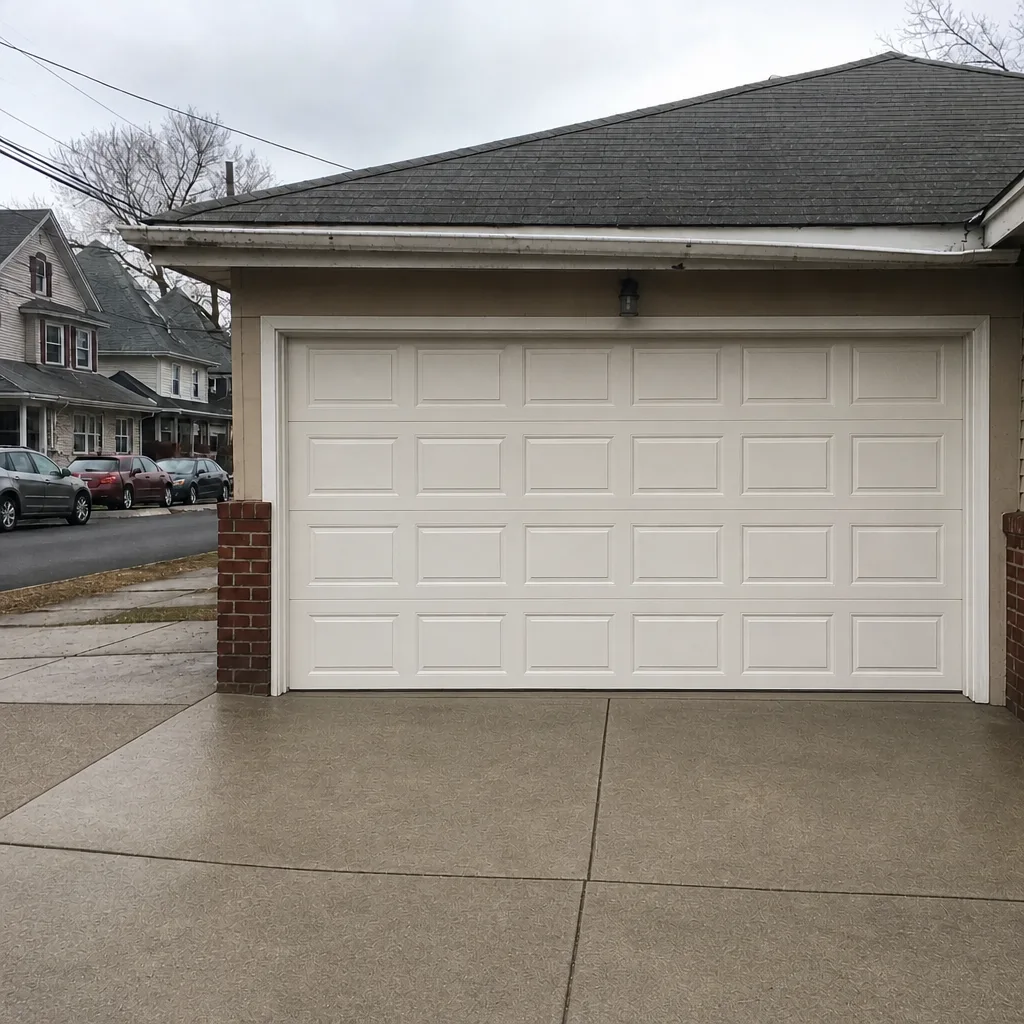 After
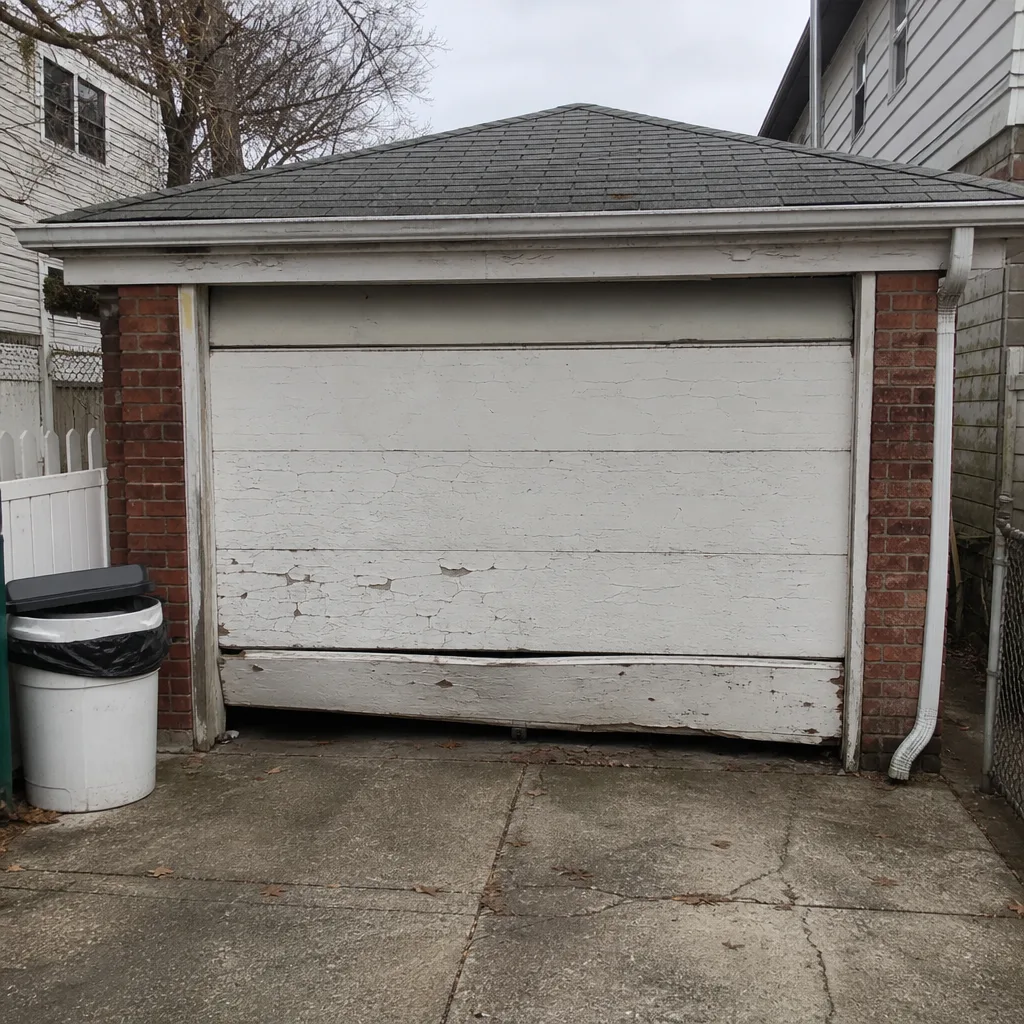 Before
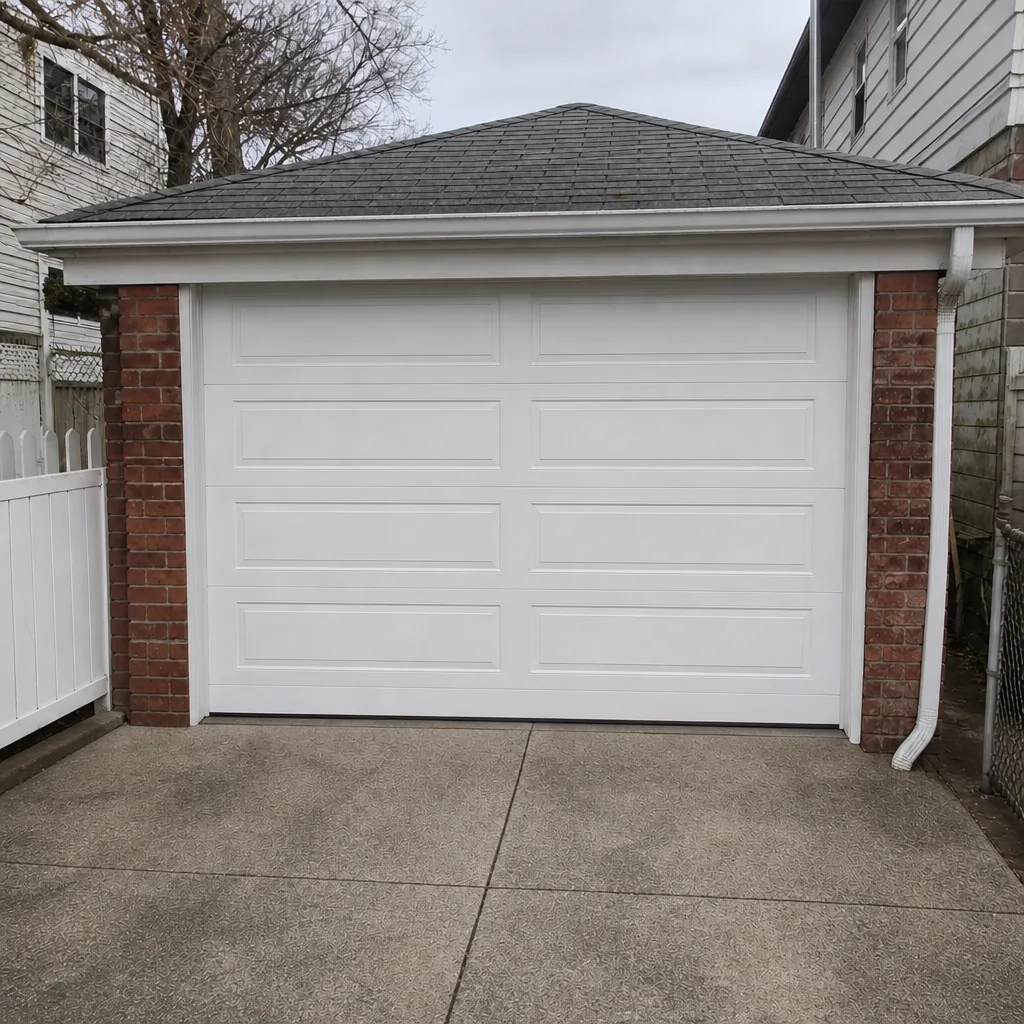 After
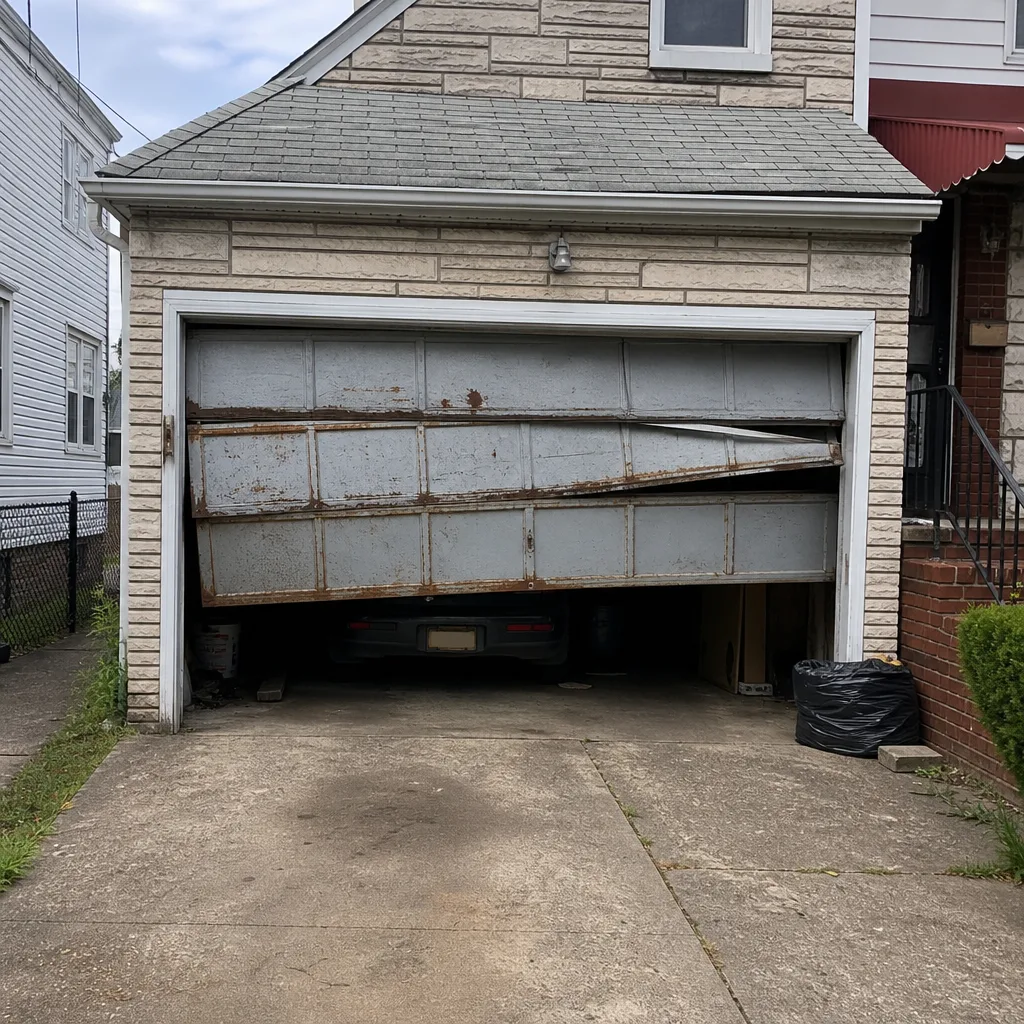 Before
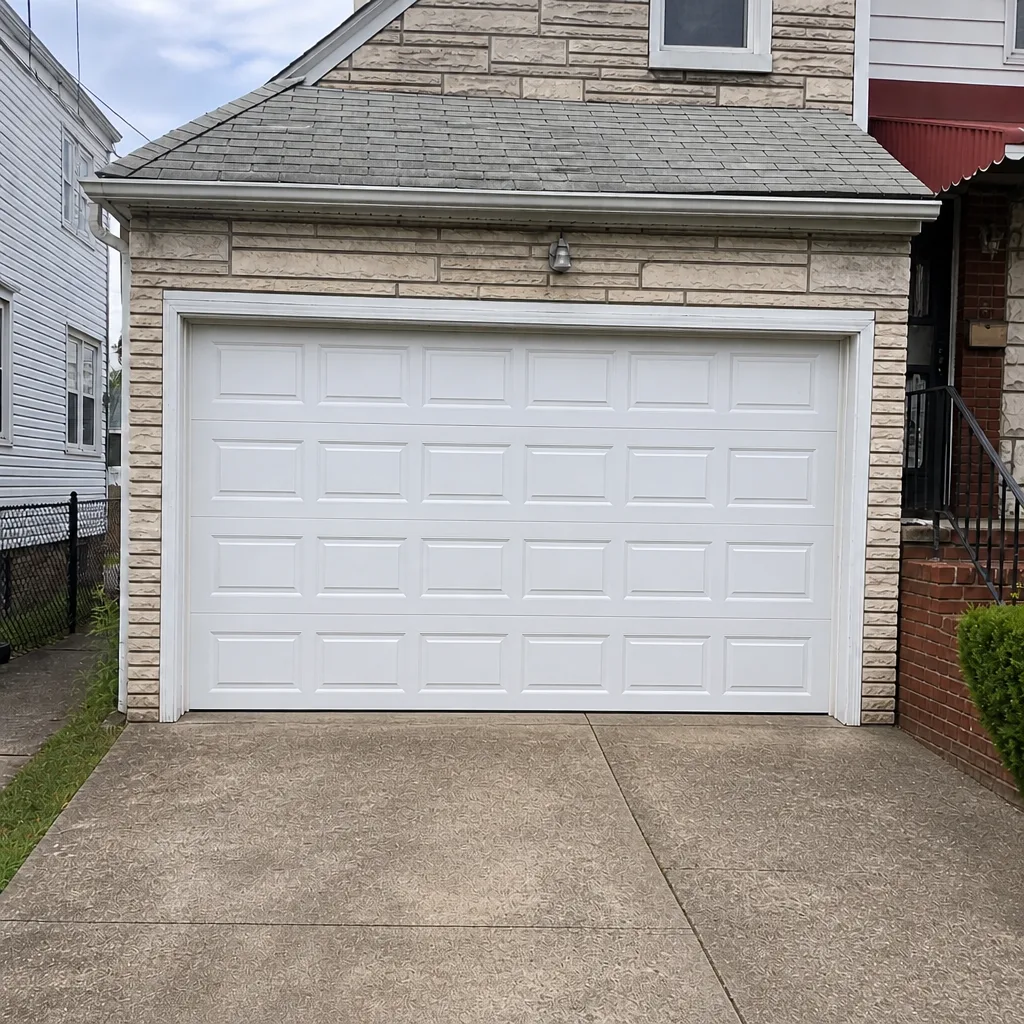 After
When to Call a Professional
Some tasks are monthly-check territory: lubricating hinges, watching the balance, testing the safety reverse. Others belong in a technician’s hands. Call a professional when you hear a loud snap from the garage and the door won’t lift, when a spring shows a visible break or the door is suddenly far heavier than it was, when a cable looks frayed or off its drum, when a panel is bowing or the door rubs on one side, or when the opener strains, reverses on its own, or won’t respond. A hard-to-lift door left running can bend track and damage the opener, turning a small repair into a bigger one. Garage Door Repair Flatbush offers free estimates in Flatbush. Call (855) 765-9251. We answer 24/7. Fast dispatch from 7am to 7pm, Sunday through Friday.
Frequently Asked Questions
Replace the bottom seal in Flatbush before the first freeze-thaw cycle in fall, and sooner if you see tears, a flattened profile, or gaps at the floor. A tight seal is the cheapest protection against cold air and moisture all winter. If you’re not sure whether your seal is past saving, a technician can check it during a free estimate.
No, WD-40 isn’t the right product for winter lubrication of hinges, rollers, and tracks. It’s a water-displacement spray, not a cold-rated sliding lubricant, and it can thicken and cause binding when temperatures drop. Use white lithium grease on hinges and silicone on tracks and rollers instead. If your door is already binding, call (855) 765-9251 and we’ll take a look.
Spring failures spike in spring because rapid temperature swings in March expand and contract spring steel faster than a steady winter cold does. The cycling works at the metal and its mountings, and the damage from a whole season can let go during the first warm-up. If a spring looks suspect, don’t operate the door; call a professional. Estimates are free.
A garage door spring repair in Flatbush is quoted per job by a written estimate after a technician looks at the door, since the cost depends on the spring type and what’s involved. The price is quoted and agreed before any work starts, so you’ll know the number up front. Call (855) 765-9251 for an exact quote.
Yes, summer heat can affect a garage door in Flatbush, mostly through direct sun on dark panels and radiated warmth from asphalt. Panels can expand and bow, and the opener motor works harder as a result. If your door binds on hot afternoons or the opener strains, call (855) 765-9251 and we’ll diagnose whether the door or the operator is the issue.
Yes, an annual inspection and lubrication routine is worth it, especially in a climate with as much temperature swing as Flatbush. Catching a worn spring, a loose seal, or a binding door early prevents a bigger, costlier repair and keeps the opener from absorbing the strain. Book a visit today for a checkup and a written estimate on anything that needs work.
The Bottom Line
Year-round garage door care in Flatbush comes down to matching your routine to the seasons rather than fighting a stereotype of harsh winter. Seal the door in fall before the freeze-thaw cycle starts. Use the right cold-rated lubricant through winter, and skip WD-40 on moving parts. Inspect springs and cables every spring, since that’s when the temperature cycling does its damage. Clear ventilation around the opener and watch for panel strain through summer heat. Respect Flatbush’s humidity with the right panel-material habits. Do the small monthly checks yourself, and call a specialist the moment something sounds like a real mechanical problem. Our technicians have up to 14 years of experience, and we work on all eight leading brands, from Clopay to Wayne Dalton to Craftsman, so we know your door’s actual hardware. One call covers it all, from repair to springs to a full new installation.
Ready to Get Your Door in Shape for the Season?
Whether it’s a bottom seal to replace before the cold, a spring that’s showing its age, or an opener that’s straining in summer heat, a quick professional check saves trouble later. Our garage door spring repair handles the most safety-critical work in the trade, and our garage door opener repair covers all the leading smart and traditional brands. If your door is past repair, a full garage door installation gets you a door built for this climate. For a free estimate, call (855) 765-9251. We answer 24/7. Fast dispatch from 7am to 7pm, Sunday through Friday.
Written by the team at Garage Door Repair Flatbush.