
Last updated November 21, 2026
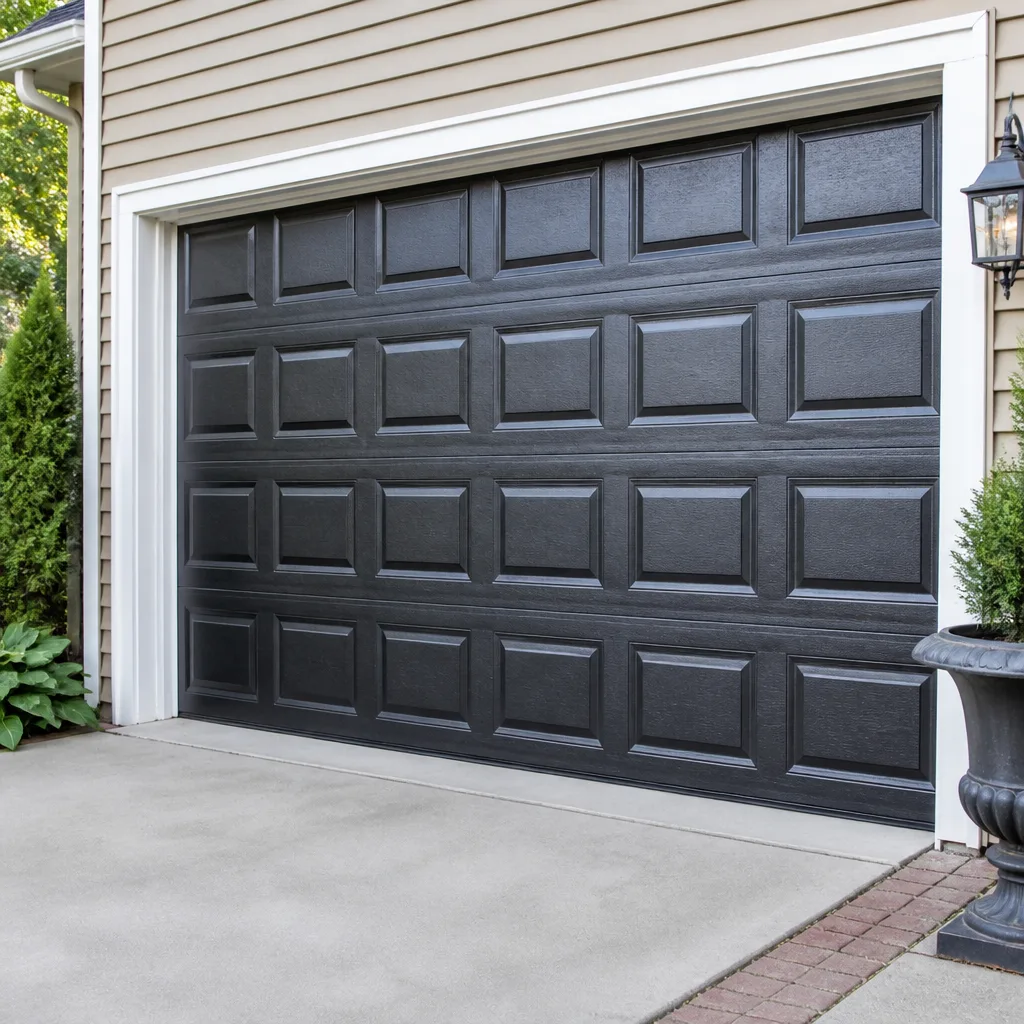 Raised-panel steel
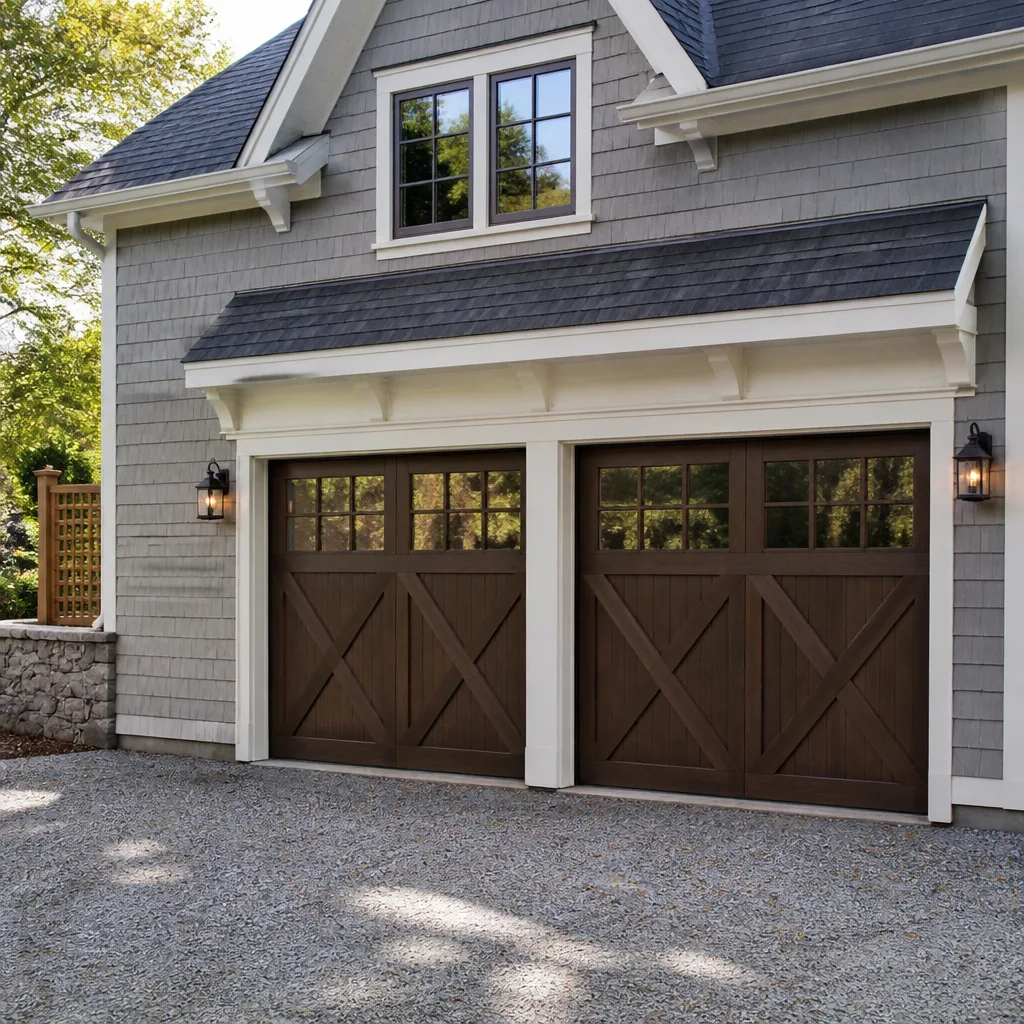 Carriage house
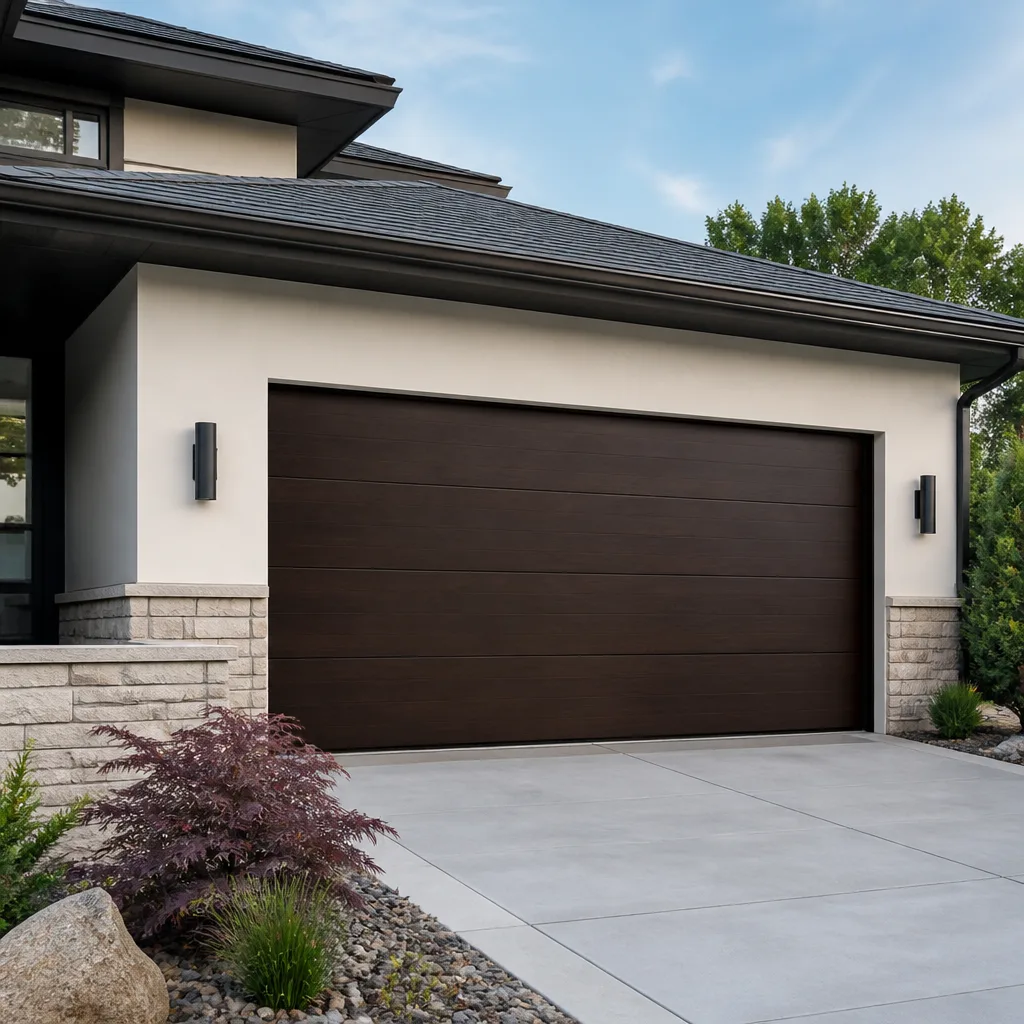 Modern flush
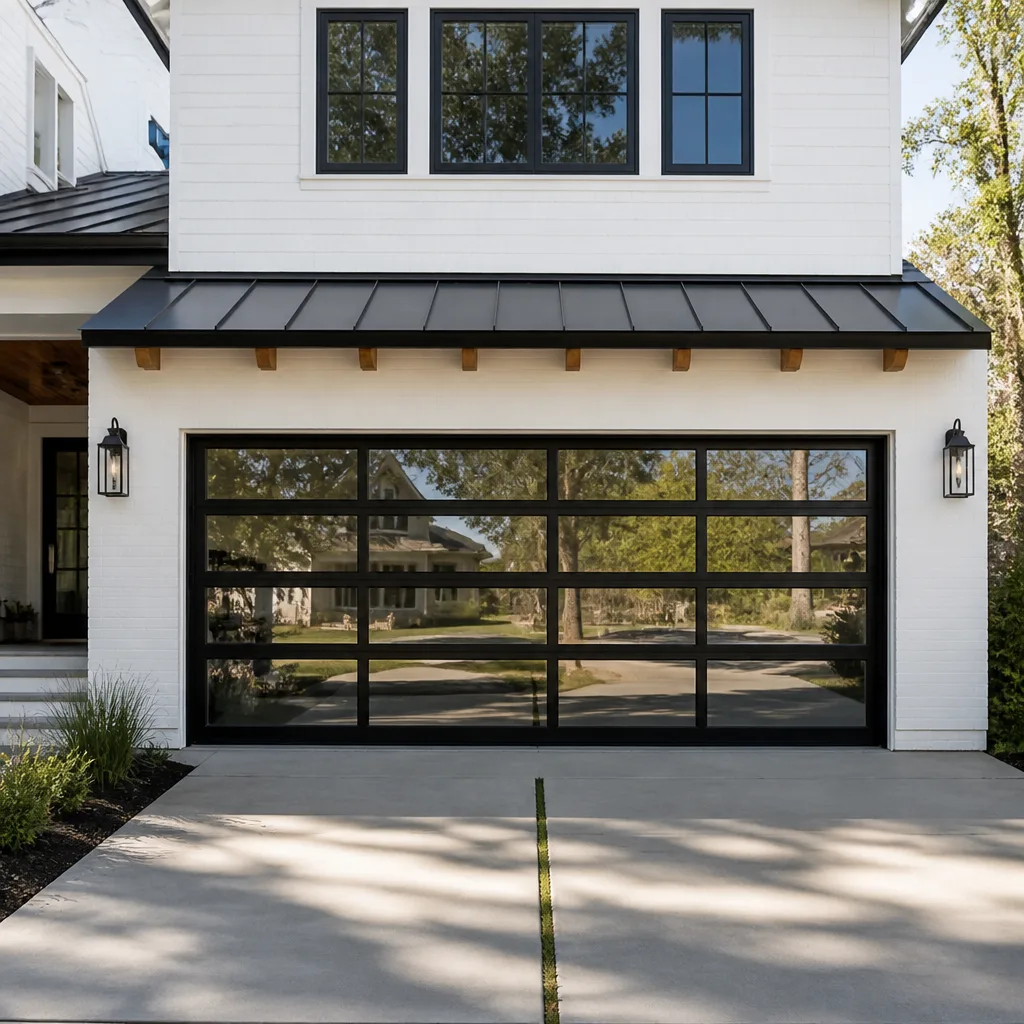 Full-view glass
 LiftMaster openers
 Chamberlain openers
Full 25-point door and opener safety check with every visit - springs, cables, rollers, tracks, and your LiftMaster or Chamberlain opener included
You get a price before we start. It does not change when the pro arrives.
Get your free estimateDIY vs Professional Garage Door: The Flatbush Homeowner’s Decision Guide
Most DIY-versus-professional advice gets the question wrong. It frames every garage door task as a skill test – are you handy enough? – when the real dividing line is physical risk. A torsion spring holds enough stored energy to break a bone or take a finger before you can let go, and no amount of YouTube confidence changes that. Meanwhile, a squeaky roller, a stiff lock, or a weather seal that’s peeled loose since the last cold snap are jobs a careful homeowner can finish in an afternoon. This guide draws the line honestly, from a shop that works on Flatbush doors every week, so you know exactly what’s safe in your hands and what isn’t.
Quick Answer
Safe DIY garage door tasks are the low-energy ones: lubrication, weather seals, roller swaps, tightening brackets, and opener remote programming. Anything that involves stored tension – torsion springs, extension springs, cables, and the drums they wind around – is professional work regardless of your skill, because one slip can cause serious injury in under a second. Panel and opener repairs sit in the middle: a homeowner can sometimes handle them, but a mistake is expensive to undo.
Styles & brands we work with
- Raised-panel steel
- Carriage house
- Modern flush
- Full-view glass
- LiftMaster openers
- Chamberlain openers
Table of Contents
- Where the DIY Line Actually Falls in Flatbush
- Why Torsion and Extension Springs Are Categorically Different
- Safe DIY Tasks That Earn Their Keep
- Judging a DIY Garage Door Panel Kit Before You Buy
- What a Botched DIY Repair Costs to Fix
- The Short Tool and Material List Worth Owning
- What’s Different About Garage Doors in Flatbush Buildings
- Opener Repairs: When DIY Turns Into a Vendor Problem
Where the DIY Line Actually Falls in Flatbush
The dividing line isn’t difficulty. It’s stored energy and consequence. A garage door system is effectively a large counterweight machine, and some parts carry enough tension to be dangerous while others are just hardware. Sorting tasks into those two buckets answers most of the DIY question before you pick up a tool.
Tasks fall roughly into three groups:
- Green – you can handle these. Lubrication, weather seal replacement, bottom bracket bolts, roller replacement, hinge swaps, remote and keypad programming, photo-eye alignment, and visual inspections.
- Amber – doable but risky or expensive to botch. Replacing a single panel, adjusting opener travel and force limits, swapping a wall button or control board, and re-engaging a door after a manual release.
- Red – stop and call. Anything touching torsion springs, extension springs, cables, cable drums, or the center bearing plate. These are the parts that hold the door’s full weight in suspension.
In Flatbush, the green zone is a little larger than in newer suburbs because so many homes and small buildings have doors that are decades old but mechanically simple. A Wayne Dalton or Craftsman sectional door from the 1980s still uses the same rollers, hinges, and seals you can buy today. That’s good news for a homeowner who wants to handle the easy maintenance and save professional calls for the parts that matter. We’d rather see a Flatbush homeowner keep their door lubricated and correctly aligned than attempt a spring swap to avoid a service call.
One more thing that isn’t obvious: your comfort zone doesn’t expand with experience on the red group. A technician with up to 14 years of experience still treats every spring as a live hazard. The physics don’t negotiate.
Why Torsion and Extension Springs Are Categorically Different
Torsion springs sit above the door, mounted on a steel shaft, and are wound under tension at installation. They store the mechanical energy that counterbalances the door’s weight – often a few hundred pounds – so lifting it feels light. To release that tension safely, a technician uses the correct winding bars and works the spring down gradually, in controlled quarter-turn increments. Both bars must stay in place until tension is fully off. That’s the part DIY videos gloss over: it’s not the strength, it’s the sequence, and a single bar slipping out under load can snap a winding bar loose or release the spring suddenly.
Extension springs work differently. They stretch along the sides of the door, and when a torsion conversion isn’t done, they’re usually fitted with a safety cable running through the middle. The cable exists for one reason: to catch the spring if it fails. But the cable only contains a break – it doesn’t reduce the injury risk if you’re handling the spring by hand.
Here’s the distinction that most guides miss:
- Torsion springs fail under rotational stress. A break can send the shaft spinning and the winding bar moving fast.
- Extension springs fail under linear stress. They snap back along their axis, sometimes with the door partially lifted.
- Both are off-limits to DIY. The mechanism differs, the risk profile is the same.
When a Flatbush door’s spring snaps, the door becomes essentially unliftable by hand. It’s not just a repair – it’s access and household safety, since the door can’t be opened normally. That’s why spring repair is a dedicated specialty here, not an add-on. It requires knowing how the spring was sized for your door’s weight, and how a Clopay or Amarr door’s original spring stack was specified, so you’re not replacing a factory-matched spring with the wrong torque spec. For any Flatbush homeowner facing a snapped spring, this is a straight call-the-professional moment – and the fix is often same-day.
Safe DIY Tasks That Earn Their Keep
A handful of maintenance jobs pay you back every season and carry essentially no injury risk. If you’re going to own a toolbox for the garage door, these are the ones that justify it.
- Lubricate hinges, rollers, and the torsion shaft. Use a lithium or silicone spray on metal-to-metal contact points, not the tracks. Keeping the moving parts clean and quiet extends their life and helps you spot a failing roller before it seizes.
- Replace the bottom weather seal. In Flatbush, a winter of freezing and thawing warps and cracks the rubber seal, letting cold air, rain, and insects in. Most seals slide out of a channel and cost little. Measure the opening’s width, pull the old one, slide the new one in.
- Swap a roller. A worn nylon roller can make the whole door shimmy. Loosening the hinge and sliding in a fresh roller is safe as long as the door is fully down and the tension is on the springs, not on your hands.
- Tighten the bolts on the bracket plates. Vibration loosens them over time. Snug them down with a socket wrench – snug, not tight enough to strip.
- Realign the photo-eye sensors. If the door refuses to close and reverses immediately, the two small sensors near the floor are usually misaligned or dirty. Wipe the lenses and line the beams up.
- Reprogram your remote or keypad. Most LiftMaster, Chamberlain, Genie, and Craftsman remotes re-pair in under two minutes with a button on the motor head or a code from the manual.
- Check balance by hand. With the door fully closed, pull the manual release. Lift the door halfway and let go. A balanced door stays put. One that drops is out of balance – a sign the springs need a professional assessment.
Each of these is genuinely safe. None of them requires getting near the tension-bearing assembly. Keep the door in good order with this list and you’ll get more years out of the door and fewer head-scratcher repair calls.
Judging a DIY Garage Door Panel Kit Before You Buy
Panel kits are where the DIY decision gets trickiest, because the market is flooded with online sellers offering “universal” panels that fit nothing in particular. A Flatbush garage, especially one in a building built long before sectional doors standardized, often uses a specific profile, thickness, and color that a generic kit won’t match. A mismatched panel looks wrong, leaks air, and throws off the door’s weight balance.
Before you click buy, check these boxes:
- Measure the existing panel height and width. Compare against the kit’s listed dimensions, not just the door’s nominal size. Half-inches matter.
- Confirm the panel profile. Flat, raised, long-panel, short-panel, and carriage-house are different profiles. A Clopay door won’t take a Wayne Dalton profile, and Craftsman and Raynor panels don’t interchange.
- Check the weight rating. A lighter aftermarket panel on one side and a heavier original on the other will torque the door and wear the springs unevenly.
- Look for the model number on the door itself. Where the sticker or stamp survives, buy the matching panel. Where it doesn’t, ask before buying.
- Read reviews for fitment complaints, not star ratings. The complaints tell you whether real buyers got them to fit their door.
The practical reality in Flatbush is that dozens of doors here predate the current panel standards, so “universal” kits rarely fit a first-time try. If the panel has a distinct profile, get a professional to identify it and order the compatible part. Panel replacement also involves re-balancing the door and re-testing the opener’s limits, so even when you buy the right panel, the install has a technical finish. That’s the edge of the amber zone.
What a Botched DIY Repair Costs to Fix
It’s tempting to think a failed DIY job only costs you the time spent. In garage door work, the cost usually lands on the repair that has to happen next, and it usually lands well above what the correct professional job would have cost the first time.
Consider the most common scenarios:
- Spring replace gone wrong. A homeowner attempts a torsion spring, gets the spring on but off-spec on the winding. The door buckles, twists a hinge, and pulls a roller out of the track. The professional job is now the original spring replacement plus realignment, hinge, and roller work. The number climbs fast.
- Off-spec panel purchase. A kit panel is installed but doesn’t match the weight and profile. The door runs crooked and the opener strains to lift it. The fix is removing the wrong panel, sourcing the correct one, and re-balancing. That’s the panel cost paid twice plus the labor.
- Bent track from a bump. Attempting to bend the track back into place by hand usually cracks the mounting brackets. A track that could have been adjusted becomes a track that has to be replaced.
- Opener wiring mixed up. Swapping a wall button or control board and miswiring it can fry the logic board. A one-part repair becomes a board replacement.
We’ve watched this pattern enough times that our default guidance is simple: the amber tasks may be worth trying if you’re genuinely careful, but the red tasks are never worth the risk of a second bill. Professional work on the spring, cable, and balance side is done right the first time and comes with a written price before the work starts. That’s the honest comparison.
And if you’ve already had a DIY job go sideways, we can take a look and give you a free estimate on putting it right. A door in trouble is a call away from being back to normal – call (855) 765-9251. We answer 24/7, and emergency service is dispatched from 7am to 7pm, Sunday through Friday.
The Short Tool and Material List Worth Owning
A homeowner who keeps the following on a shelf near the garage handles 80 percent of the safe tasks without buying anything new. There’s no need to accumulate specialty garage door tools – those earn their keep for a working technician, not for a homeowner.
- Lithium or silicone spray lubricant. For hinges, rollers, and the torsion shaft. Keep it away from the tracks.
- A socket and wrench set. Standard sizes handle most bracket and roller bolts.
- A replacement weather seal sized to your opening. Cheap, easy to fit, and the single biggest comfort improvement in a Flatbush winter.
- A spare set of nylon rollers. Ten minutes to swap when one seizes.
- Photo-eye sensor wipes or a clean cloth. Two sensors, two lenses, one smudge and the door won’t close.
- The door’s manual. A printed copy stored with the remote’s programming steps saves a search every time.
- A level. For checking whether a track has drifted or a panel is sitting uneven.
What’s missing from the list is deliberate. Winding bars, cable pullers, and spring clamps are professional tools – a homeowner buying them is buying a false sense of capability. The whole point of keeping the safe list short is that everything on it is genuinely useful, and nothing on it invites risk.
What’s Different About Garage Doors in Flatbush Buildings
Flatbush isn’t a suburb of identical new-build doors. The neighborhood stock is a mix of single-family homes, small multi-family buildings, and century-old structures where the garage was carved out, added on, or renovated over time. That mix changes the DIY calculation in a few specific ways.
First, door age. Many Flatbush doors are older models that used simpler mechanicals but also lack modern opener safety features – no reversal sensors, no force limiting. A garage door that reverses on contact should be standard. On older doors, it may not be, and the fix isn’t a DIY adjustment. It’s a professional safety check.
Second, winter. Flatbush gets cold enough that seals harden, tracks contract, and the door’s balance drifts seasonally. A door that closed fine in October can start sticking in January. Most of that is maintenance you can handle with lubricant and a fresh seal. Some of it is a spring losing tension, which is a professional job.
Third, structural variety. A garage door set into a building envelope may have different clearances, header heights, and track mounting than a standalone garage. That matters when you’re judging a panel kit – a profile that fits one building’s opening may not fit the next door down the block.
What stays constant is the safety logic. Our technicians work on LiftMaster, Chamberlain, Genie, Clopay, Amarr, Wayne Dalton, Craftsman, and Raynor systems, and across all of them, the rules are the same: springs, cables, and drums are professional territory; maintenance and seals are fair game. For any door in Flatbush where the safe list doesn’t cover the problem, a free estimate will tell you what the professional job involves before you commit to anything.
Opener Repairs: When DIY Turns Into a Vendor Problem
Openers are the most common DIY attempt because they look electronic, not mechanical – like fixing a thermostat. That’s partly right. Some opener work is genuinely safe: reprogramming remotes, re-pairing a keypad, replacing a battery, resetting the travel limits on a door that stops short or overshoots. Anything that involves opening the motor housing and handling the logic board or wiring is riskier and often voids the manufacturer’s setup.
The bigger issue is diagnostics. When a door won’t close, the cause could be a misaligned sensor (DIY), a warped track (professional), a failing spring that’s throwing off the opener’s force limit (professional), or a dead control board (professional). A homeowner can burn an evening swapping parts and still not address the root cause. The door keeps refusing to close, and the real repair was never at the opener.
We handle both halves of the system – the door and the operator – which matters here. When a LiftMaster or Chamberlain opener seems to be failing, the actual fault is often in the door’s balance or the spring tension. Fixing the opener without fixing the door is a short-term patch. A diagnostic visit that covers both is what resolves the problem for good.
If you’re mid-DIY and the door still won’t behave, it’s worth the call. A free estimate on garage door opener repair gets you a straight answer on whether the opener, the door, or both need attention. Call (855) 765-9251. We answer 24/7.
Common Mistakes to Avoid
- Attempting a torsion spring swap to save a service call. The spring is stored energy, and a winding slip can cause a serious injury in a fraction of a second. No tool you can buy at a hardware store makes it safe.
- Using WD-40 on the tracks. It attracts dust and gums up the rollers over time. Use the right lubricant on the moving parts, and leave the tracks dry.
- Buying a “universal” panel without matching the profile. In a Flatbush garage where the door predates standard panel sizing, a generic kit is a wasted purchase. Confirm the model and profile first.
- Adjusting the opener’s force limit to compensate for a sticking door. If the door is straining, the opener isn’t the problem. Overriding the safety limit hides the real issue and makes the door run harder.
- Bending a damaged track back by hand. Tracks are easy to crack and harder to replace once bent. If a track has drifted, have it looked at.
- Leaving the photo-eye sensors to fail silently. A sensor that’s misaligned, dirty, or nudged out of place will stop the door closing – check them before assuming the opener is dead.
- Trying to lift the door with a broken spring by force. A door without spring tension is heavy enough to hurt someone or drop on a pet. Leave it down and call for help.
See the difference
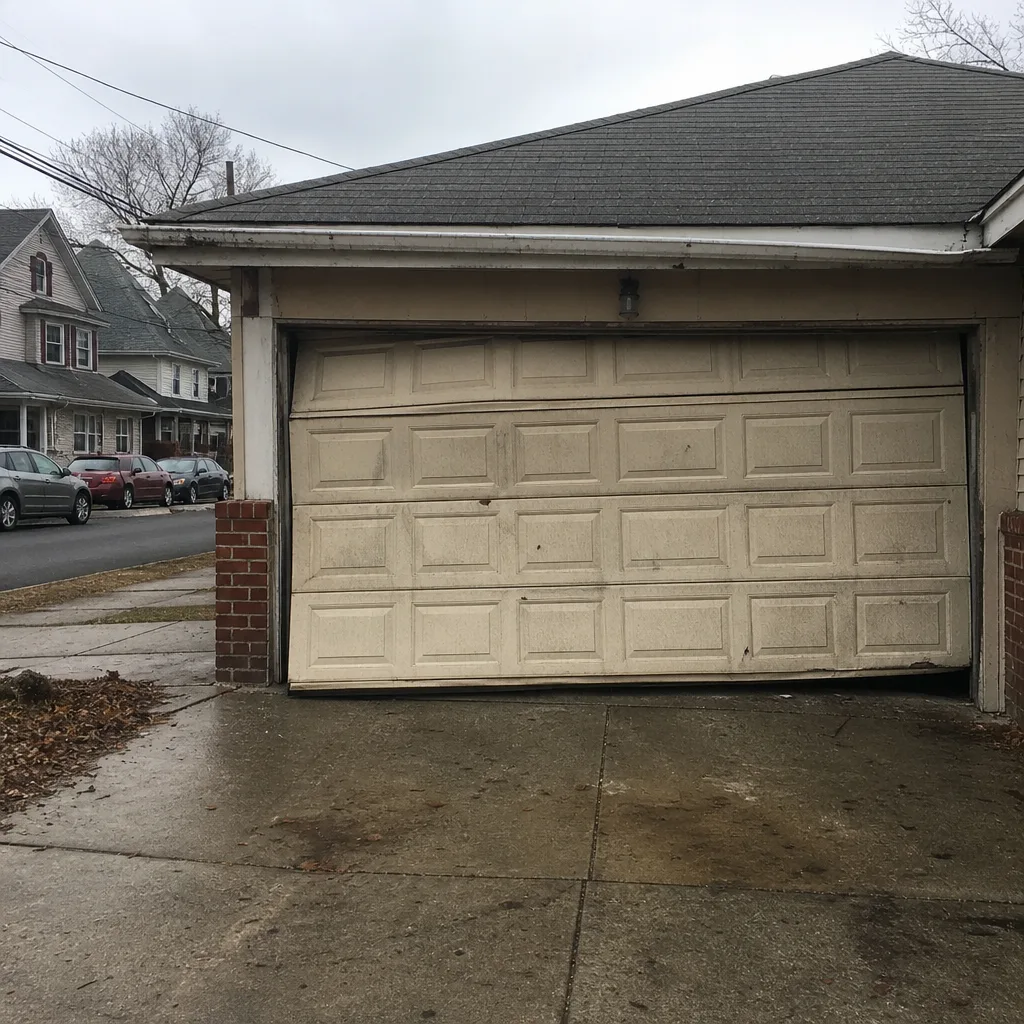 Before
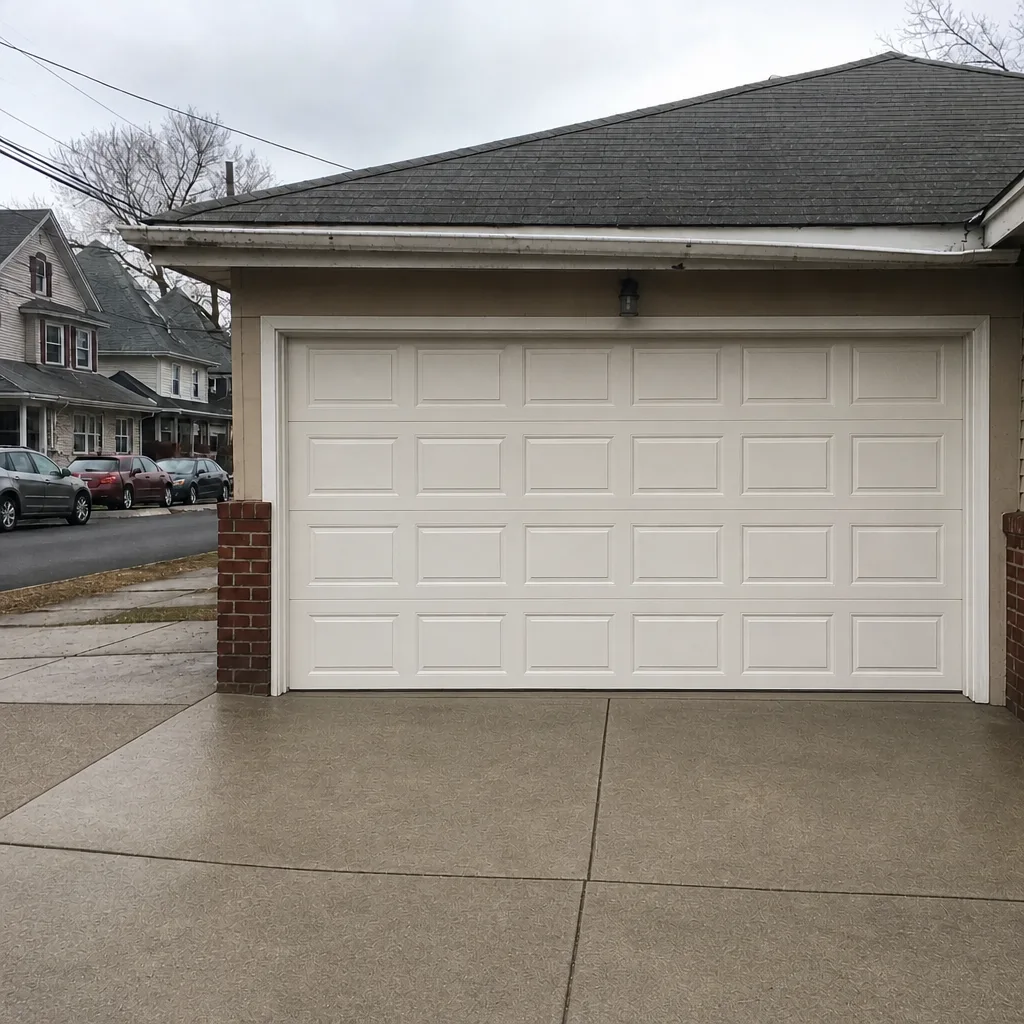 After
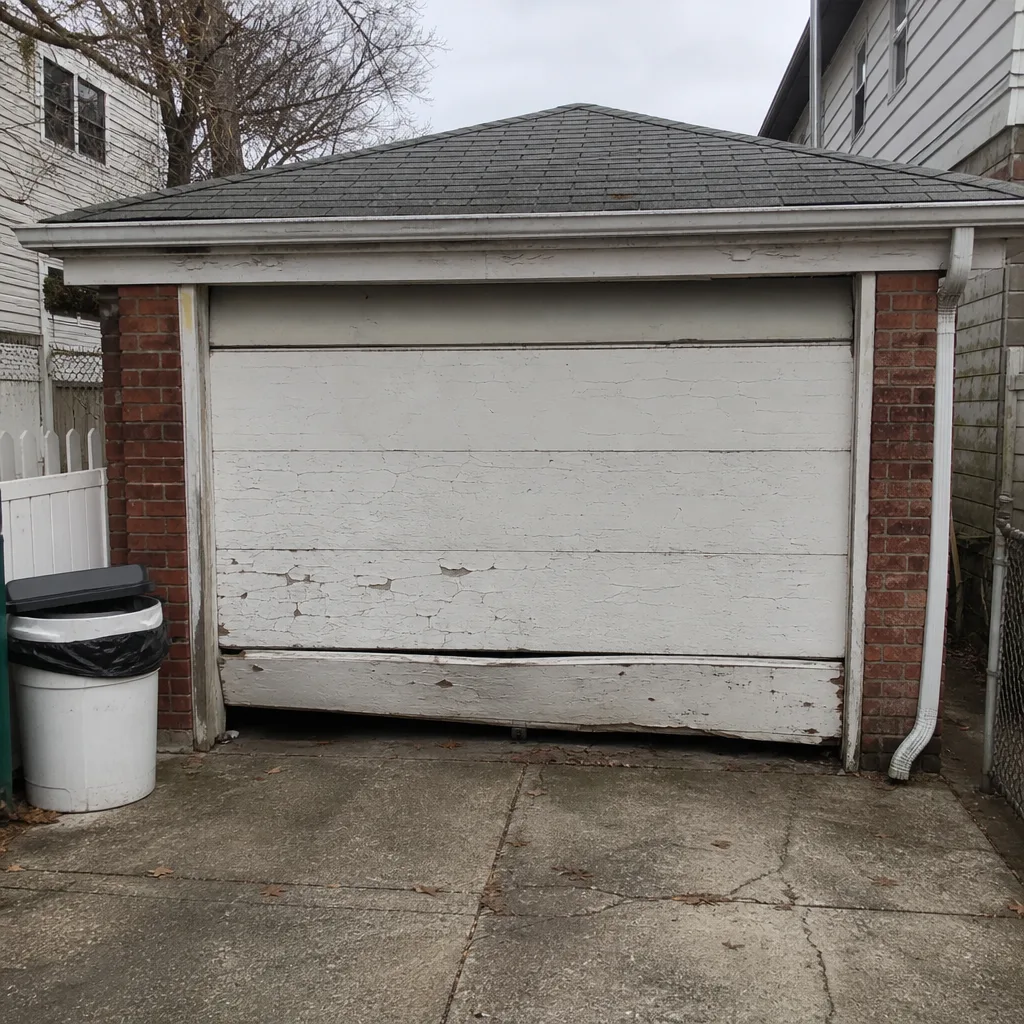 Before
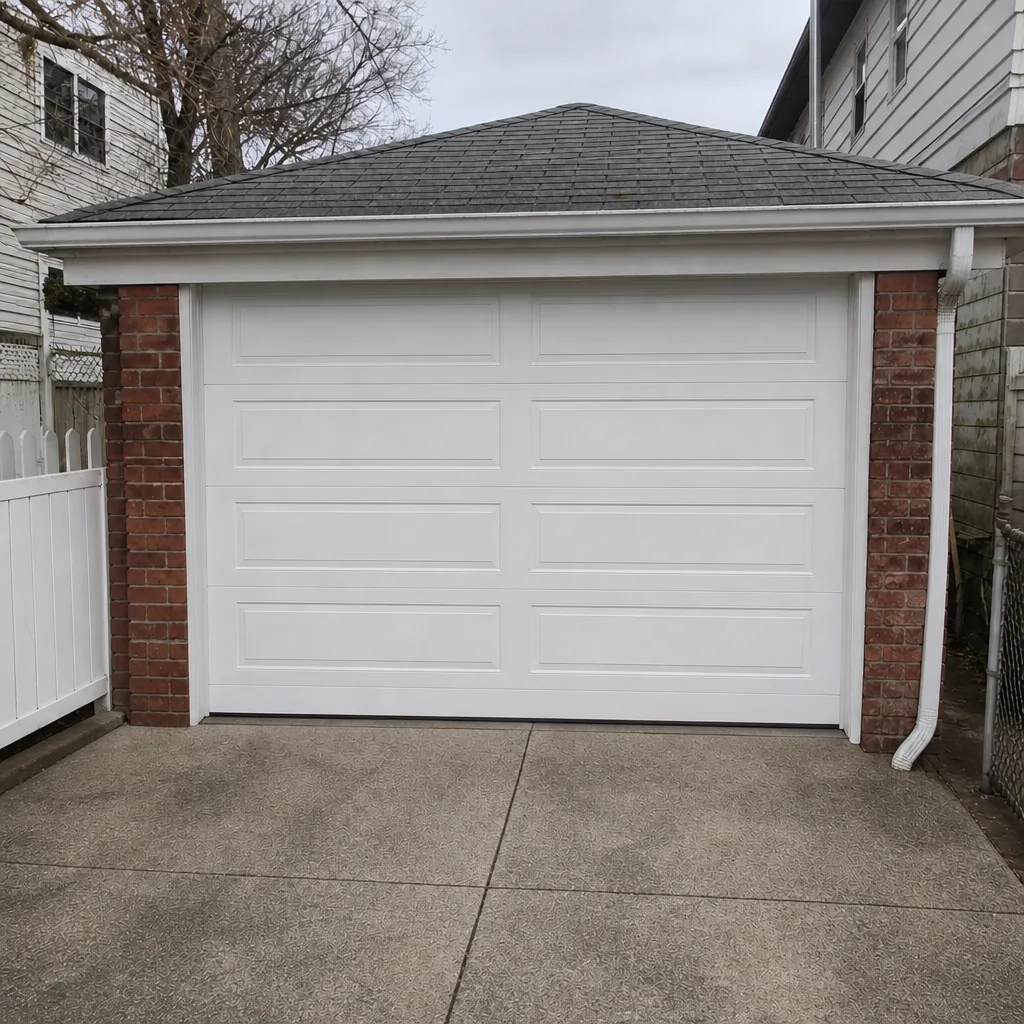 After
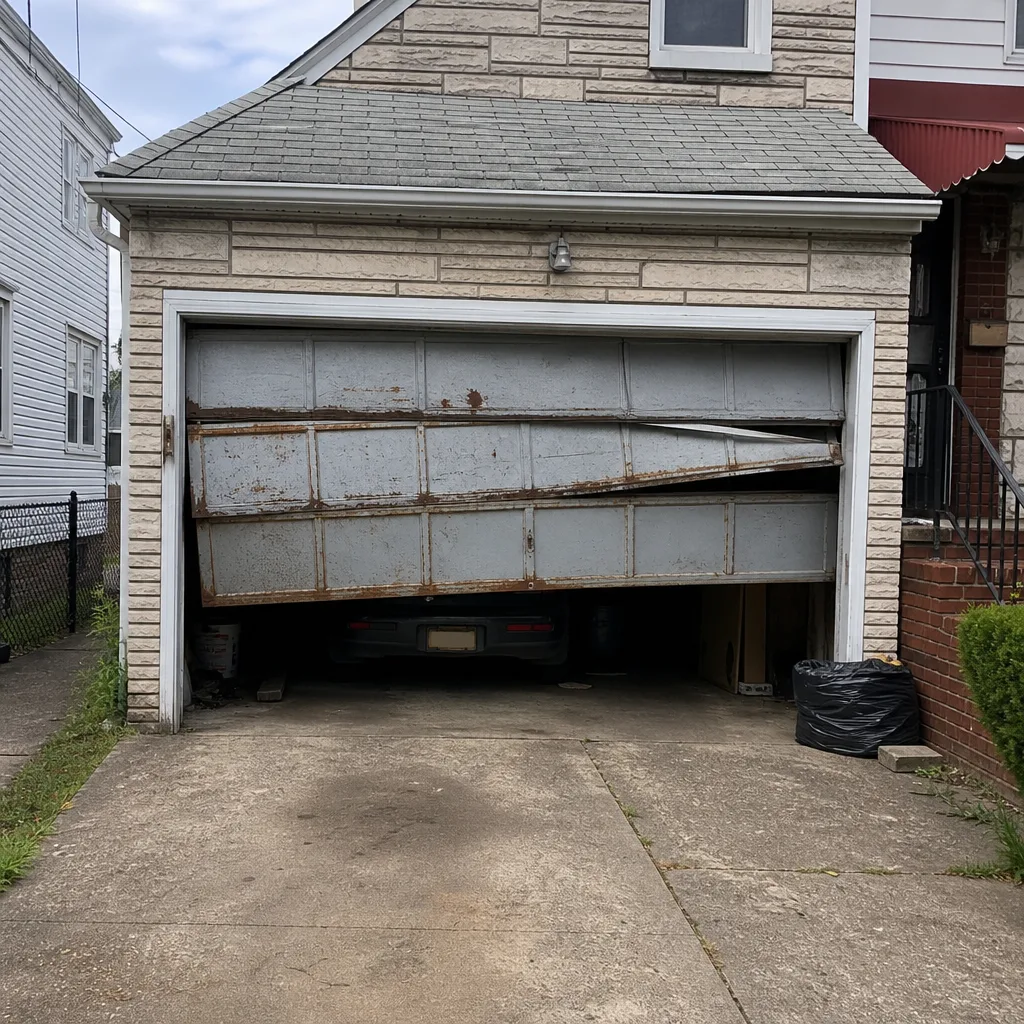 Before
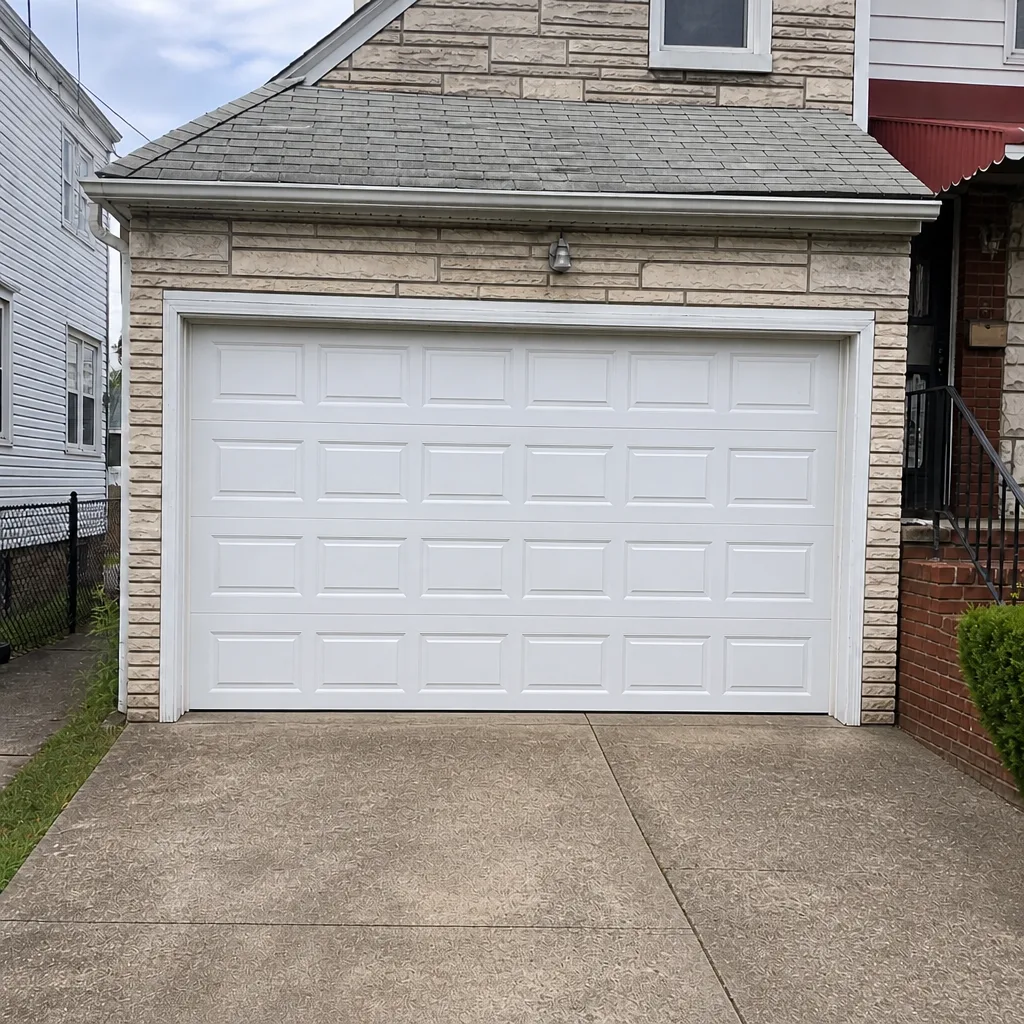 After
When to Call a Professional
Call a professional for any task involving springs, cables, or cable drums – full stop. Also call for a door that’s out of balance, a track that’s bent or has come loose from its mounting, a panel that needs replacing, an opener that trips its safety reversal more than occasionally, or any time a repair attempt has made the problem worse. On the emergency side, a door jammed open or closed is a security and access issue worth prompt attention. Garage Door Repair Flatbush offers free estimates in Flatbush – call (855) 765-9251. Our technicians have up to 14 years of experience, and emergency service is available for urgent situations. We answer 24/7, and fast dispatch from 7am to 7pm, Sunday through Friday means a call more often than not gets a real answer the same day. For a full installation or a door replacement, ask for a free measure and a written price. When a spring snaps, or a door stops working entirely, our garage door repair team handles the diagnosis and the fix under one roof.
Frequently Asked Questions
No. Garage door springs are wound under tension and store enough energy to cause serious injury, so there’s no safe DIY method for replacing a torsion or extension spring. The correct tools and the right sequence aren’t enough to change the risk. Call a specialist for spring replacement – the fix is typically done the same day, and the price is quoted before any work starts. Call (855) 765-9251 for a free estimate.
Lubrication, weather seals, roller swaps, tightening brackets, photo-eye alignment, remote and keypad programming, and visual inspections are all safe for a careful homeowner. These tasks involve no stored spring tension and use basic tools. Keep to that list, and the only professional calls you’ll need are for the parts that carry real risk.
Only if the panel matches your door’s profile, weight, and model. In Flatbush, many doors predate current panel standards, so “universal” kits often don’t fit. Confirm the model and profile before you buy, or have a technician identify the correct panel. A mismatched panel can throw off the door’s balance and strain the opener.
Spring pricing is set per job and depends on the door’s size and spring configuration, so there’s no single number. The right move is to get a written estimate on your specific door before work begins. That price is the price. Call (855) 765-9251 for a free estimate.
A botched repair is fixable, but it usually costs more than the original professional job would have. The right step is to stop working on the door and get a diagnostic visit. We can look at what’s happened and give you a free estimate on what it takes to put the door right, whether that’s a single part or a fuller repair.
We do same-day service when the schedule allows, and emergency service is available for urgent situations. A door stuck closed is an access and security issue, so call early in the day if you can. Call (855) 765-9251. We answer 24/7, and fast dispatch runs from 7am to 7pm, Sunday through Friday. If you call outside dispatch hours, we book you into the next opening. If you need a full new door, that’s a scheduled measure-and-install visit – ask for a free measure and a written price on garage door installation.
The Bottom Line
The honest DIY line for garage doors is stored energy, not skill. Anything you can do with a spray can, a socket wrench, or a pair of hands on a seal is fair game, and doing it yourself will extend the life of the door. Anything that unwinds, holds, or tensions a spring is professional work for a good reason: the consequence of a mistake is a serious injury, not a messy job. In Flatbush, the safe list is bigger than you’d think and the risky list is shorter and more specific. Keep the safe list, call for the rest, and you’ll spend less over the life of the door. For a specialist look at any door in Flatbush, our team works on the full range of leading brands. For everything from garage door repair to a new installation, one company covers it. Call (855) 765-9251 for a free estimate, and get Garage Door Repair Flatbush on the line when a door needs real help.
Written by the team at Garage Door Repair Flatbush.