
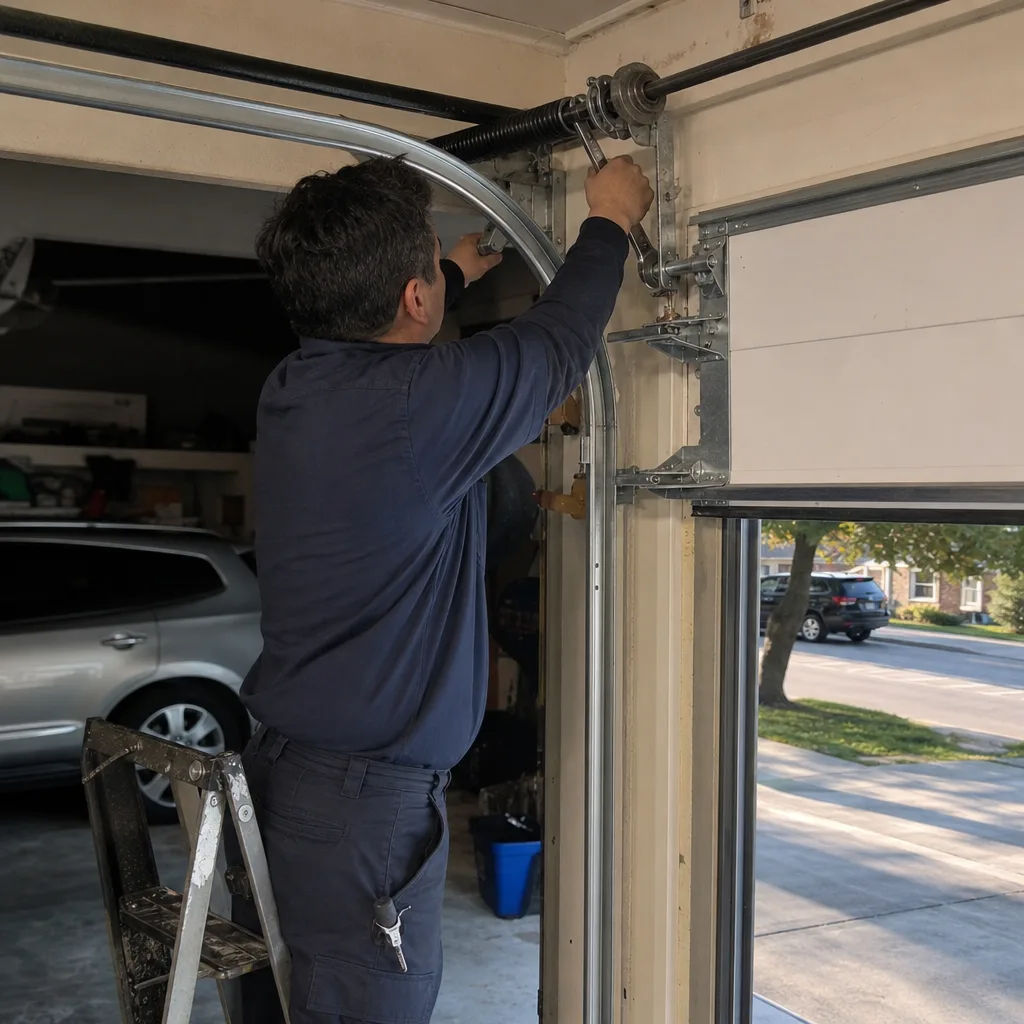
Last updated November 21, 2026
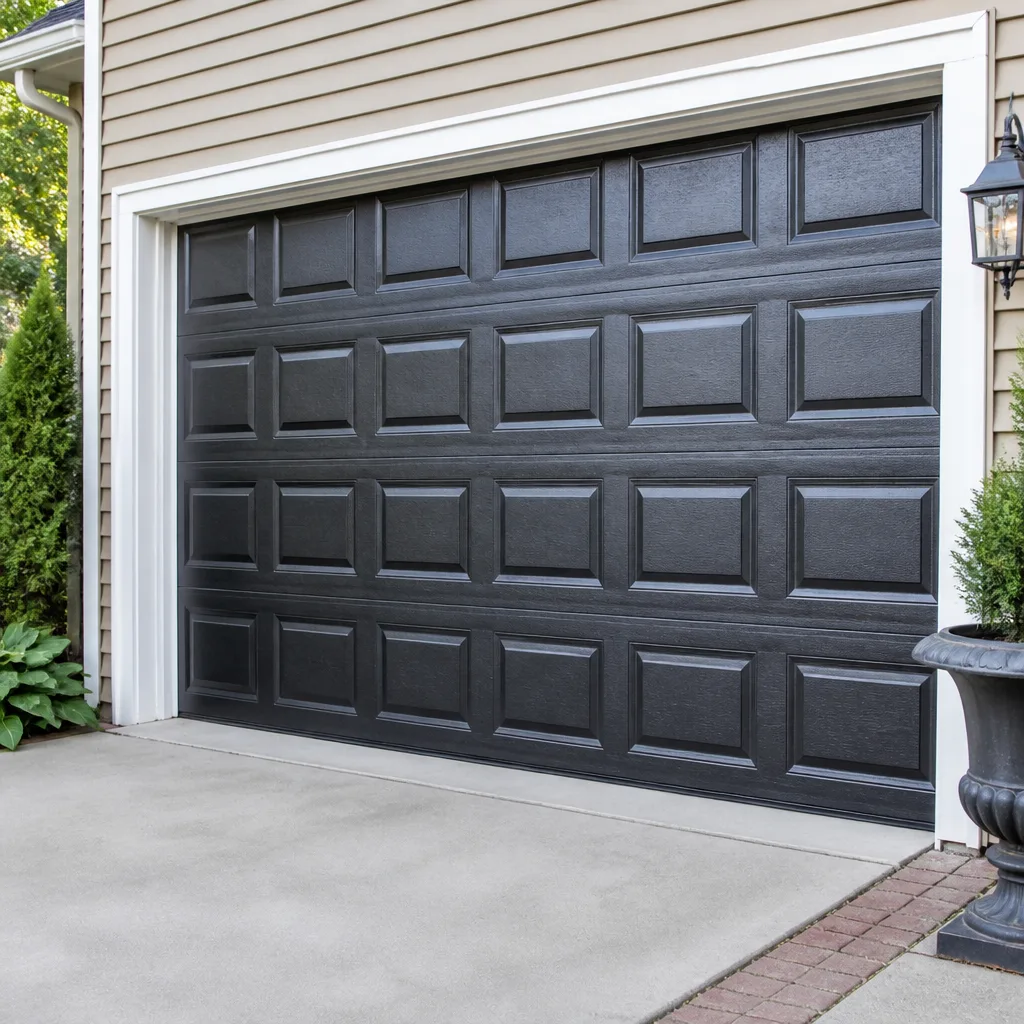 Raised-panel steel
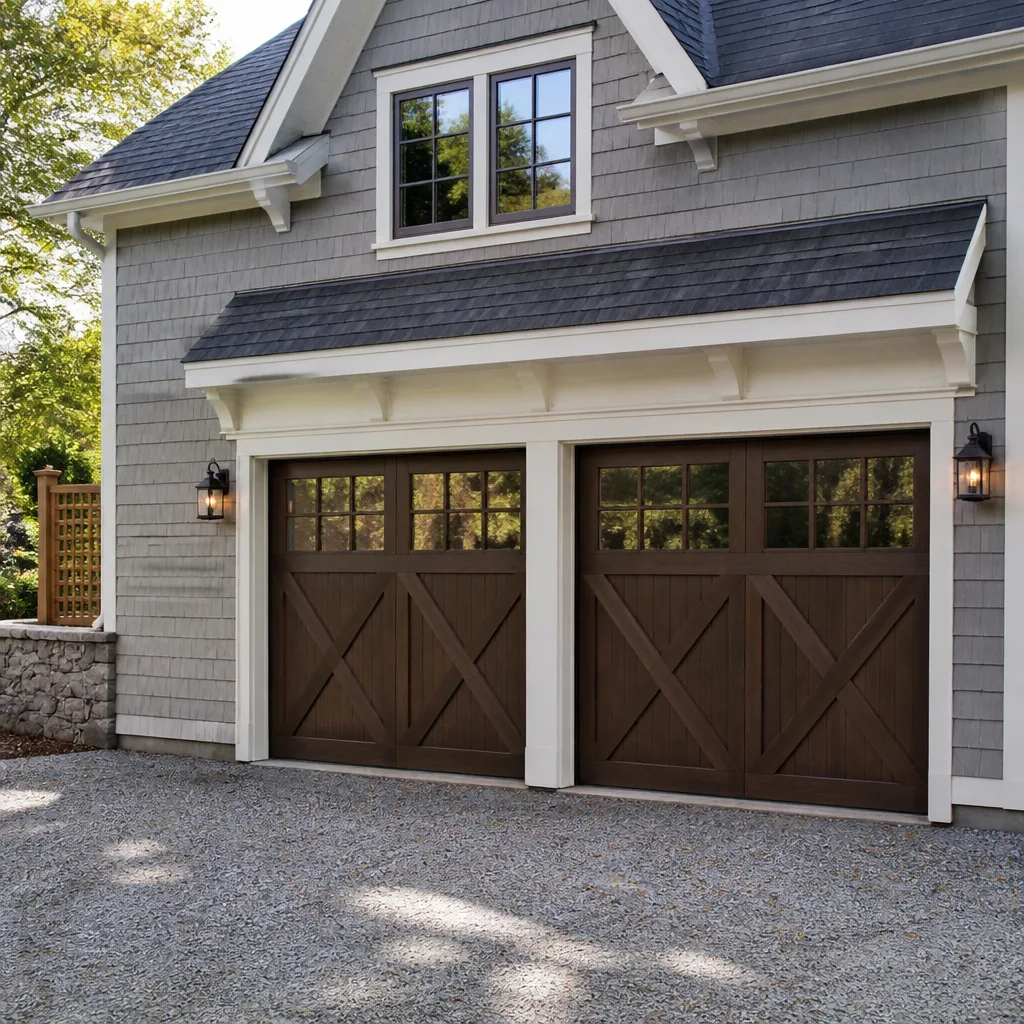 Carriage house
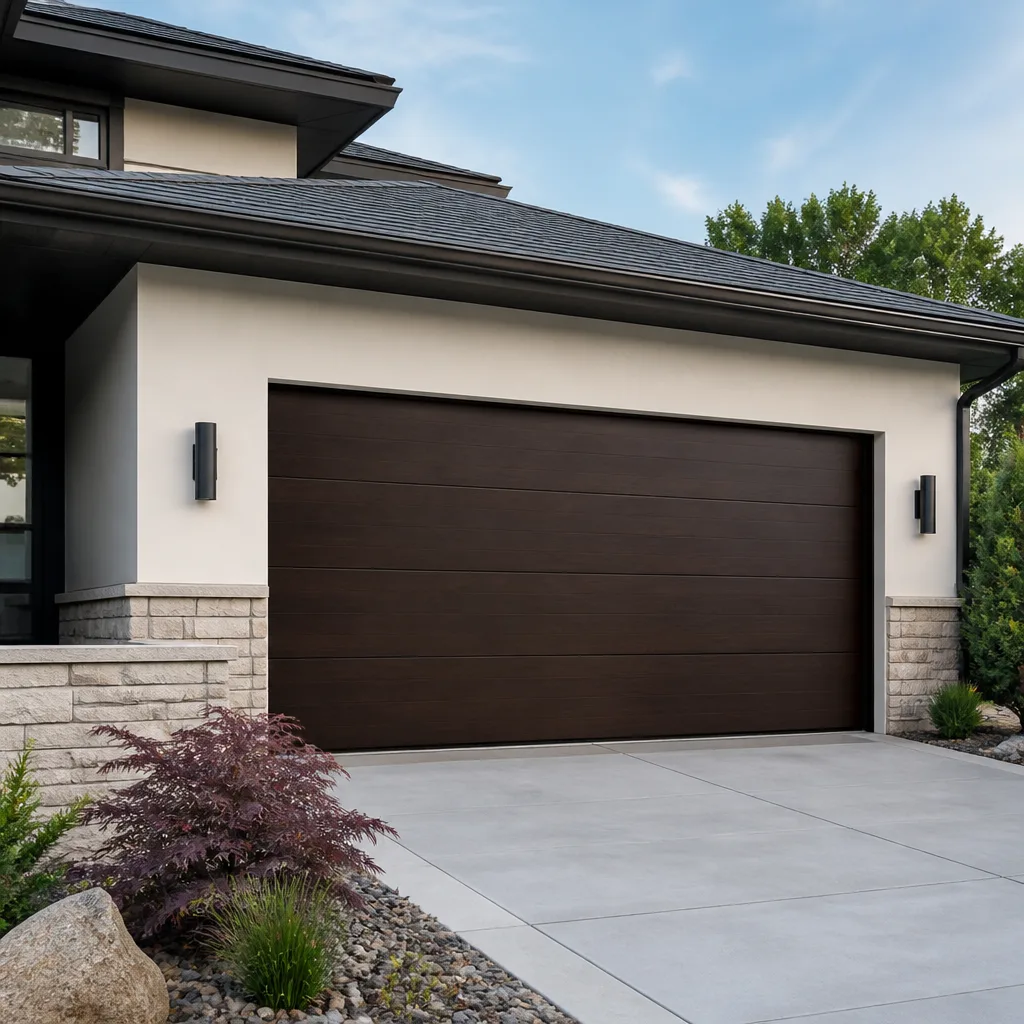 Modern flush
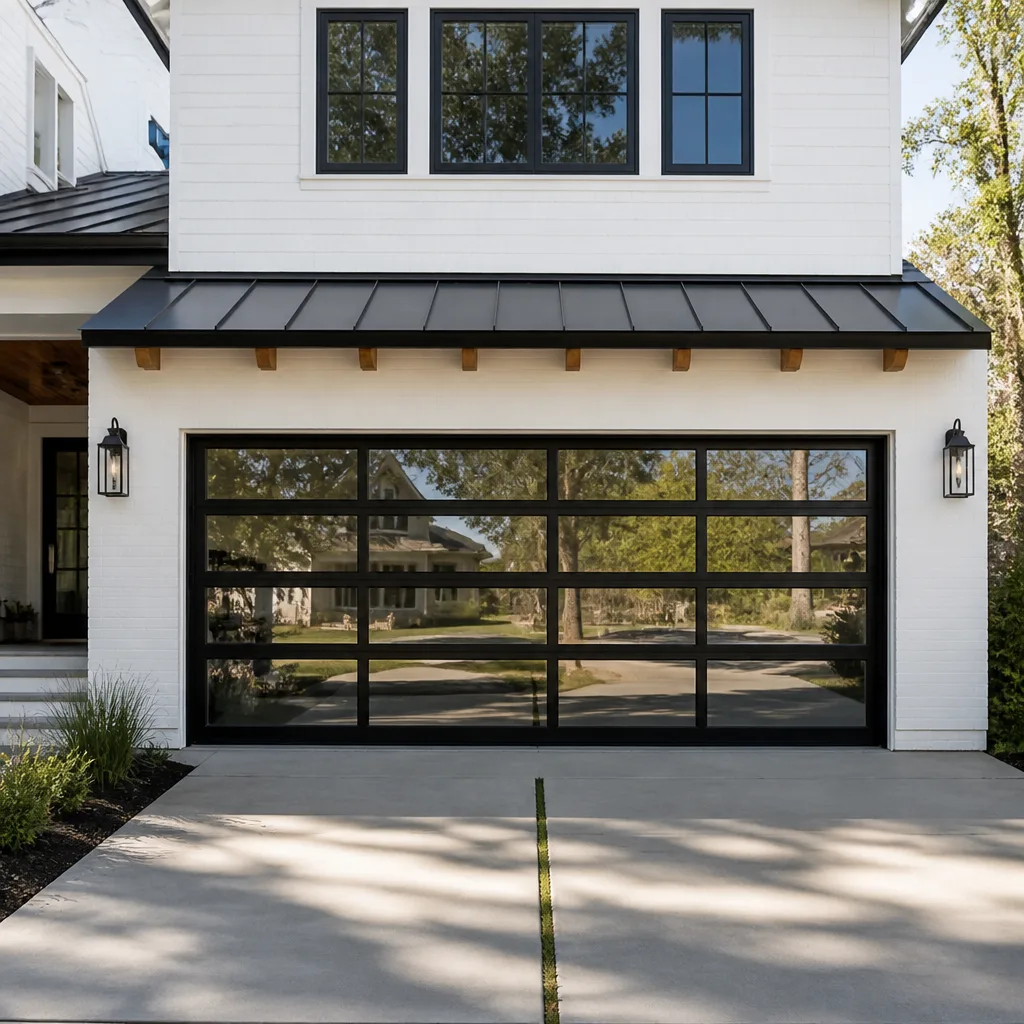 Full-view glass
 LiftMaster openers
 Chamberlain openers
Full 25-point door and opener safety check with every visit - springs, cables, rollers, tracks, and your LiftMaster or Chamberlain opener included
You get a price before we start. It does not change when the pro arrives.
Get your free estimateGarage Door Warning Signs: A Flatbush Homeowner’s Reference Guide
A grinding noise when your door opens is not the same emergency as a torsion spring that has visibly separated – but most homeowners treat both the same way. They either ignore everything until the door quits entirely, or they panic and call for every squeak. The difference matters, because one symptom means “keep an eye on it” and another means “stop using this door right now, before someone gets hurt.” This guide gives you a triage framework for the doors we actually see around Flatbush: the pre-war garages off Ocean Avenue, the newer builds near Brooklyn College, and the tight residential blocks where a jammed door blocks your only way in. We’ll walk through what each sound means, what each visual sign means, and how to sort it all into three honest categories.
Quick Answer
Most garage door warning signs are a “monitor it” situation, but three are genuine “stop using the door immediately” emergencies: a visibly broken torsion spring, a frayed or snapped cable, and panels separating at their hinge points. Grinding, squeaking, and minor vibration are usually wear you can watch. When in doubt, look at the door from a safe distance, don’t touch the springs or cables, and call a specialist for a free estimate.
Styles & brands we work with
- Raised-panel steel
- Carriage house
- Modern flush
- Full-view glass
- LiftMaster openers
- Chamberlain openers
Table of Contents
- The Three-Tier Triage System for Flatbush Doors
- What Each Sound Is Telling You: Grinding, Squeaking, Popping, Banging
- Visual Signs: What’s Urgent and What’s Just Wear
- How to Safely Test Balance and Auto-Reverse
- One Symptom or a Bigger Problem? How to Tell
- How Flatbush Housing and Weather Shape Door Wear
- Common Mistakes to Avoid
- When to Call a Professional
The Three-Tier Triage System for Flatbush Doors
Not every warning sign deserves the same reaction. When you notice something off with your garage door, the first question isn’t “who do I call?” – it’s “which category does this fall into?” Here’s the framework we use when we walk a homeowner through a symptom over the phone.
Tier 1: Cosmetic or Monitor. The door still opens and closes smoothly and safely. These are symptoms you log and watch:
- Light squeaking that comes and goes with the seasons
- Minor vibration in the door as it travels up and down
- A door that looks a little scuffed or has cosmetic panel dents without any structural flex
- Rollers that look visibly worn but still track properly
With these, a lubrication schedule and a visual check every few months is usually all you need. Call us if any of them get worse – not before.
Tier 2: Schedule Service Soon. The door works, but something is degrading and will eventually fail. Get an appointment on the books rather than waiting for it to strand you:
- Grinding or scraping during travel
- A door that reverses on its own before hitting the floor
- Slow operation on one side, or one side that lags noticeably
- An opener that struggles, strains, or runs longer than it used to
- Rollers or hinges past their service life
These are the calls that save money and stress – a trained pro can catch a worn component before it fails and turns into an emergency.
Tier 3: Stop Using the Door Immediately. These are true emergencies. Do not operate the door and do not try to fix them yourself:
- A torsion spring that is visibly broken, snapped, or has a gap in the coil
- A frayed, cut, or snapped cable hanging loose
- Panels that have separated at hinge points or look structurally loose
- The door has come off its track on one side
- Any visible damage that lets the door sag or hang unevenly on one side
In Flatbush, where many homes have a driveway that feeds directly into a narrow block and a garage doing double duty as storage or an entry point, a Tier 3 symptom means the door needs to be off-limits until a specialist looks at it. That’s how we sort every call.
What Each Sound Is Telling You: Grinding, Squeaking, Popping, Banging
Every garage door noise traces back to a specific component. The trick is matching the sound to the part. Here’s what each one usually indicates on the doors we service across Flatbush – and how serious it is.
Grinding
A grinding sound almost always involves metal-on-metal contact: worn rollers with flat spots, dry hinges, or a bent track scraping the edge of a roller. Grinding is Tier 2 – worth an appointment, not a stopped door. Left alone, the friction wears out parts faster and can eventually deform the track.
Squeaking
Squeaking is the sound of two surfaces needing lubrication. Hinges, rollers, and the torsion tube are the usual suspects. This is the friendliest warning sign you’ll get – a few drops of garage-door lubricant on the moving parts and it usually resolves. If squeaking returns quickly after you lubricate, there may be a deeper wear issue and it’s worth a look.
Popping
A sharp pop or grind at the moment the door starts to move often points to a spring, a drum, or the opener’s gear and rail assembly. It’s Tier 2 in most cases, though if it’s paired with a door that suddenly feels much heavier to lift, treat it as Tier 3 until you can confirm the spring is intact.
Banging
Banging or slamming means the door is dropping or hitting the floor with force, not decelerating. That points to a failing opener, a bad limit setting, or a spring that’s lost tension. The auto-reverse and force settings deserve a look, and you shouldn’t let this continue – the door and opener both take damage with every impact.
If the noise is loud and new, and the door feels heavier than it used to, stop and call. That combination is how a lot of torsion spring failures announce themselves. On the doors we work on – LiftMaster, Chamberlain, Genie, Craftsman, and the rest of the leading brands – the sound profile is very consistent, and a technician can usually narrow it down before the truck rolls.
Visual Signs: What’s Urgent and What’s Just Wear
Visual inspection is best done with the door in the down position, from a few feet back, and without reaching for any part of the spring or cable system. Here’s what you’re looking for and how to sort it.
Genuinely urgent – stop using the door:
- Broken torsion spring. A torsion spring sits horizontally above the door. When it breaks, you’ll see a clear gap in the coil. The door becomes dangerously heavy. This is one of the most technically demanding repairs in the trade, and it is not a homeowner job.
- Frayed or snapped cable. Cables run along the sides of the door and work under extreme tension. Any time you can see fraying, kinks, or a hanging cable, the door is at risk of dropping.
- Panel separation at hinge points. If panels are pulling apart where the hinges mount, the door’s structural integrity is compromised. It can fold or come off the track.
Normal wear – keep an eye on it:
- Dusty or slightly worn rollers (they still roll freely)
- Cosmetic dents in a panel that don’t affect the door’s movement or alignment
- Paint or finish weathering on the outside of the door
- Small amounts of rust on non-structural hardware
Spring and cable inspection is a look, not a touch. We want to say this clearly: torsion springs and cables are under enormous tension. They can cause serious injury when they let go. That’s why we recommend trained professionals for anything involving these components – and why we treat spring repair as a standalone specialty rather than a side job. The visual check is how you decide whether to call. The work itself isn’t.
If a spring or cable concern is what you’re seeing, our garage door repair team can look at it and give you a written price before anything is touched.
How to Safely Test Balance and Auto-Reverse
Two tests tell you a lot about the health of your door and opener, and both can be done from the ground without touching the springs, cables, or any moving hardware. Do them carefully, and stop if anything feels or sounds off.
The Balance Test
- Disconnect the opener. With the door fully closed, pull the manual release cord. This lets you open the door by hand.
- Lift the door about halfway and let go. Stand clear while you do it.
- Watch what happens. A balanced door should stay roughly in place. If it falls or lifts on its own, the springs or the door’s tension are not right.
- Don’t force a door that feels too heavy to lift easily. Set it down gently and leave it – a door that feels like it weighs far more than it should is a sign the spring system needs attention from a pro.
Once you’re done, re-engage the opener by running it – the trolley will reconnect on the next cycle.
The Auto-Reverse Test
- With the door connected and the opener on, place a solid object like a 2×4 laid flat on the floor in the middle of the door’s path.
- Close the door using the opener. It should reverse within a couple of seconds of contacting the object.
- If the door presses all the way down on the object or stops without reversing, the safety setting needs adjustment.
- Separately, wave something across the safety sensors near the floor while the door is closing. It should reverse.
If the auto-reverse fails, get it addressed quickly. These are the settings that keep people and pets safe. That’s an opener issue rather than a door issue, and our garage door opener repair team handles settings, sensors, and force adjustment as part of a standard visit. For heavy spring and balance concerns, call us before doing anything else on the door by hand.
One Symptom or a Bigger Problem? How to Tell
Some warning signs are isolated. A squeaky hinge is a squeaky hinge. But other symptoms are the visible tip of a deeper problem – and treating them as isolated is how a $75 tune-up becomes a bigger repair. Here’s how to tell which you’re looking at.
Standalone symptoms usually affect one small, clearly identifiable part:
- A single hinge that squeaks while others are quiet
- One roller with a visible flat spot
- A single panel with a dent that hasn’t affected alignment
- A sensor that got bumped or dusty and needs clearing
Systemic symptoms show up as an imbalance or irregularity across the whole door:
- One side that lags or rises slower than the other. This is a classic example. It looks like a track issue, but it can actually indicate a partially failing cable on the weak side. A cable carries the load on its side of the door, and when it stretches or frays, that side gets sluggish. Don’t just clean the track and wait.
- Uniform grinding across the whole travel, indicating widespread roller or hinge wear
- A door that feels heavier by hand than it did a few months ago
- An opener that strains at the same points in every cycle
The general rule: if you notice a symptom on one part, treat it as isolated. If you notice a difference between one side of the door and the other, or a change in how the whole door feels, treat it as systemic and get a professional look. In our experience walking doors across Flatbush, roughly half the “one side is slow” calls turn out to be a cable, not a track – and the fix is different in each case.
Systemic symptoms are also worth having documented, especially if you’re a property manager overseeing more than one garage. We can give you a written price per door before anything is done.
How Flatbush Housing and Weather Shape Door Wear
A garage door in Flatbush lives a different life than one in a suburban cul-de-sac. The building type, the exposure, and the winter freeze-thaw cycle all put wear on different parts of the door, and knowing the local patterns helps you interpret what you’re seeing.
Short driveways and tight blocks. Many Flatbush homes have a compact driveway that feeds into a tight block, sometimes with the door operating close to a neighboring property or fence. That geometry increases the number of cycles you put on the door – more in-and-out in a smaller space – which speeds up roller and hinge wear. If yours is a door that gets cycled a dozen times a day, a lubricate-and-check routine every few months pays off.
Winter freeze-thaw in the New York climate. Flatbush gets cold, wet winters. That means metal hardware contracts and expands, lubricants thin out or thicken, and the door’s track can pick up small amounts of grit and moisture that turn into wear points. Squeaking that only appears in winter and disappears in spring is very common and often a lubricant issue rather than a mechanical failure.
Housing stock matters. The pre-war buildings around the neighborhood often have original or older door systems that have been serviced piecemeal. The newer townhomes near Brooklyn College tend to have modern openers and standard-width doors. Both benefit from the same triage approach, but the older doors reward a closer visual inspection because the hardware is more likely to be at the end of its service life. We work on all the major brands – Wayne Dalton, Raynor, LiftMaster – so whether you’re opening a door on an older building or a newer one, we’ve seen the hardware pattern before.
And a heads-up for anyone worried about a specific warning sign after bad weather: if a storm has blown through, do a visual check of the springs, cables, and panel alignment before you cycle the door. It takes a minute and it’s how you catch damage before it strands you.
Common Mistakes to Avoid
- Assuming every symptom needs a service call. A squeaky hinge doesn’t need a technician – it needs lubricant. Calling for every noise wastes your time and money. Use the triage tiers and let the free estimate tell you whether it’s actually a repair.
- Ignoring the “watch-worthy” signs until they fail. The flip side. A grinding sound today is a broken door next month. If a symptom is on the Tier 2 list, schedule it – don’t wait for it to become a Tier 3 emergency.
- Operating a door with a broken spring or frayed cable. This is the one that causes injuries. A torsion spring is under extreme tension and can fail catastrophically. If you see a gap in the coil or a frayed cable, stop using the door and call a professional.
- DIY spring or cable repair. Garage door springs and cables are among the most dangerous parts of any home system. They require proper tools, proper technique, and a trained hand. This is not a weekend project for a homeowner, and it’s not a job for a general handyman.
- Adjusting force or sensitivity settings without knowing what you’re doing. The auto-reverse and force settings are about safety. If you dial them up to mask a problem, you’re disabling the feature that protects people and pets.
- Assuming the “slow side” is a track issue. It can indicate a stretching or fraying cable. Cleaning the track won’t fix that, and the cable gets worse the longer you wait. Have it looked at.
- Letting one small issue go unflagged when you’re managing a multi-unit property. If you oversee several garages, a slow-developing symptom on one door is worth recording. A pattern across doors – same noise, same wear – is often a signal that the whole system type needs attention.
When to Call a Professional
Call a professional if any of the following is true: you see a broken torsion spring, a frayed or snapped cable, or panels separating at the hinges; the door has come off the track; the door reverses on its own or fails the auto-reverse test; or you find a symptom on one side of the door that isn’t mirrored on the other. Also call if you’re not sure – the triage framework gives you a starting point, but a trained eye over a free estimate settles it. We handle repair, opener and sensor work, spring repair, and full replacement, so one call covers the system. Garage Door Repair Flatbush offers free estimates in Flatbush – call (855) 765-9251. Our technicians have up to 14 years of experience, and we work on your brand.
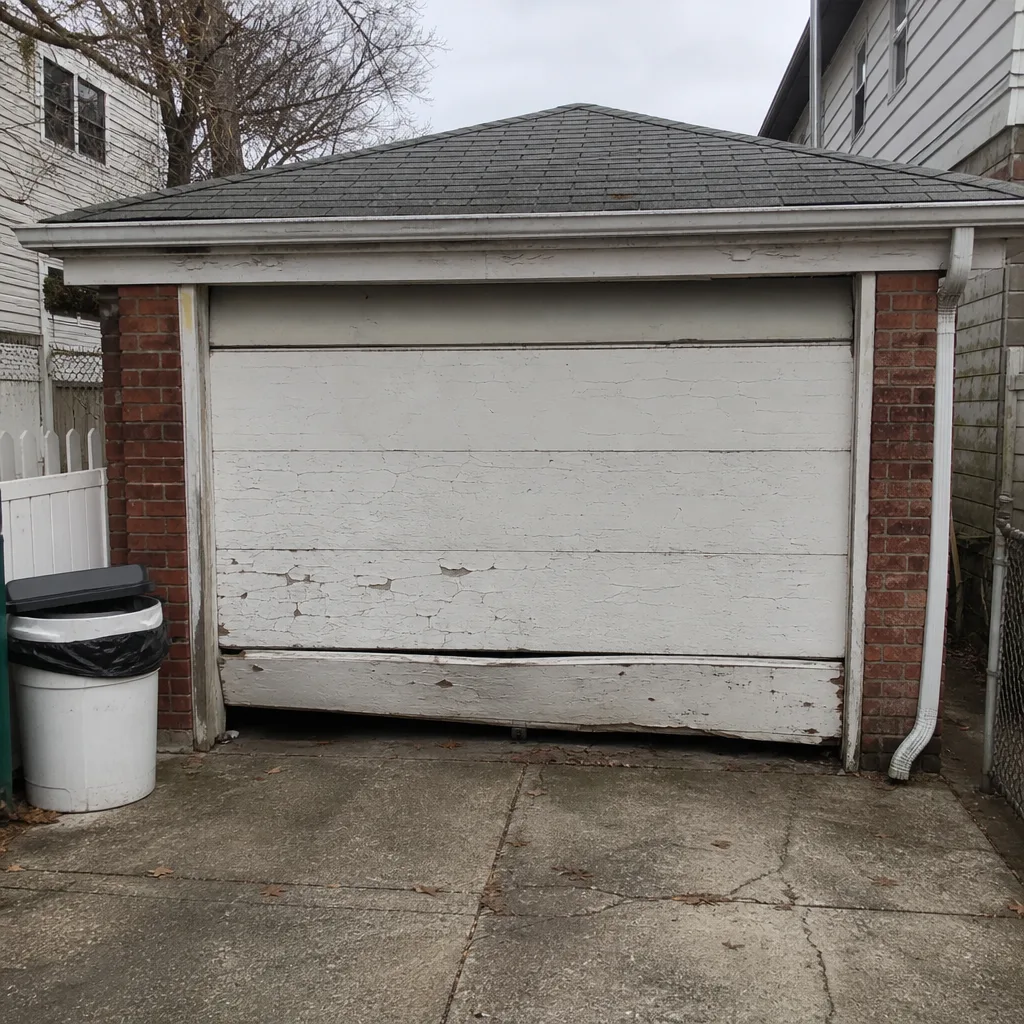
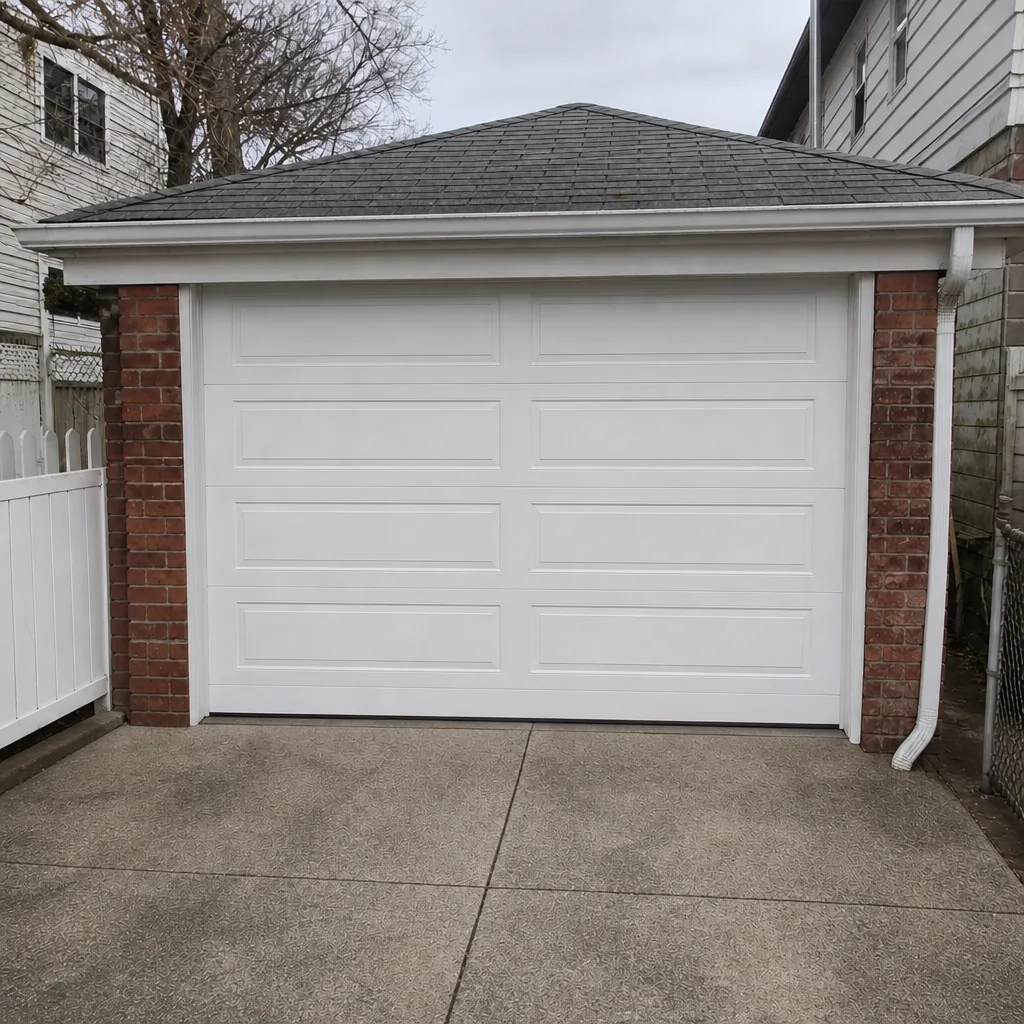
See the difference
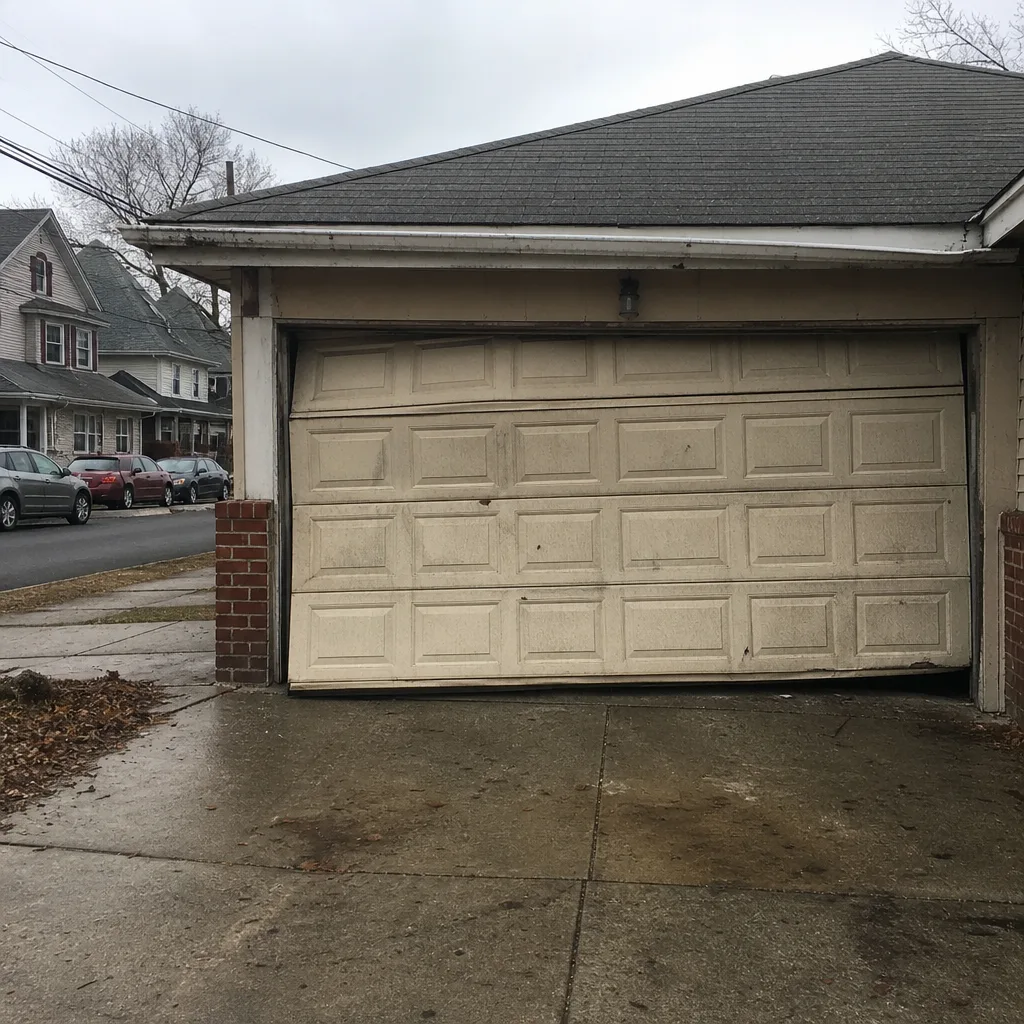 Before
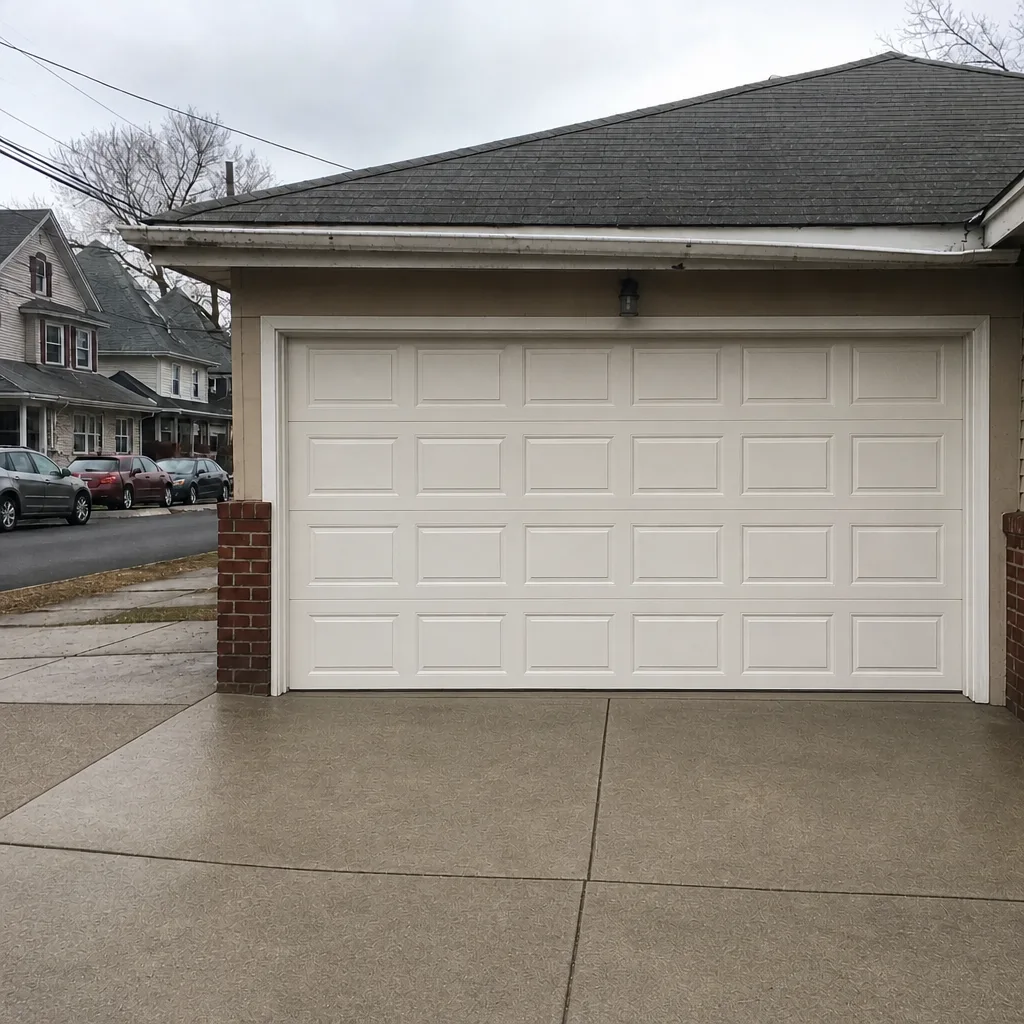 After
 Before
 After
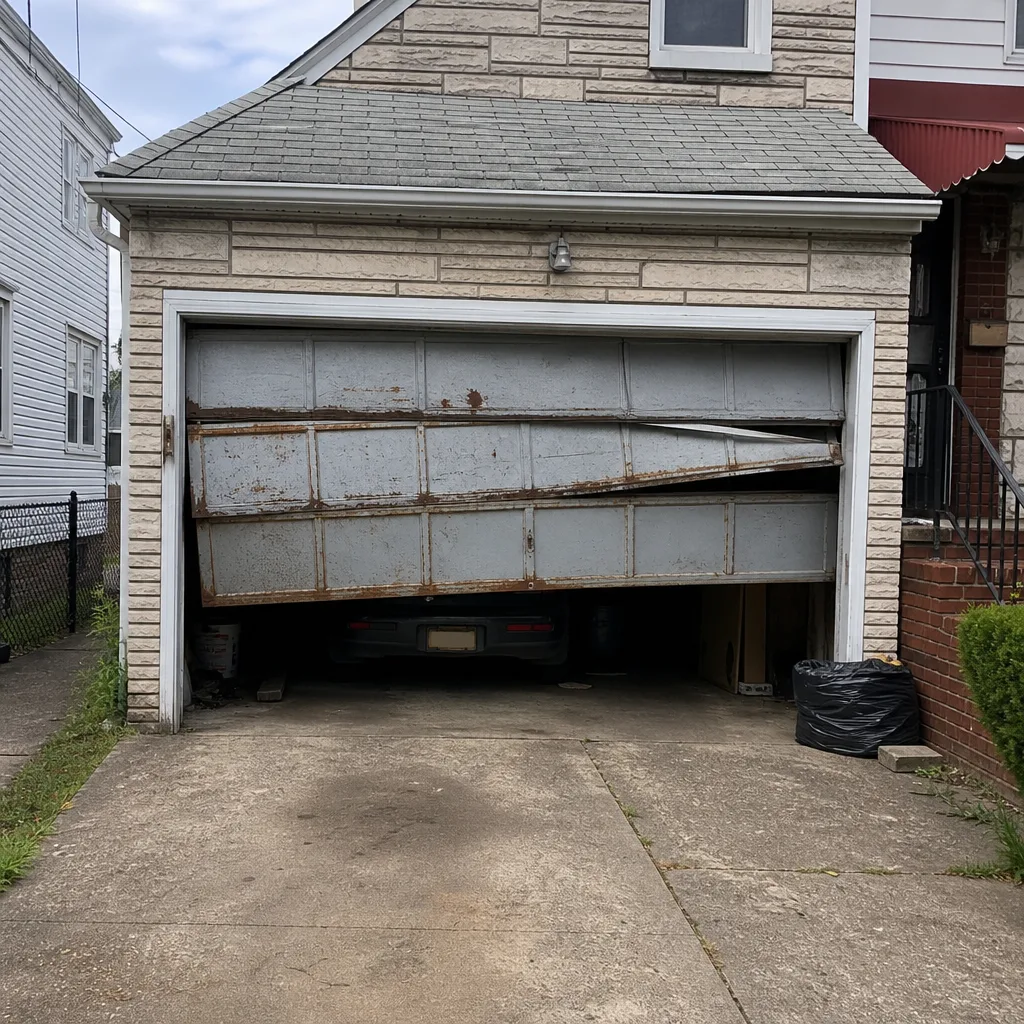 Before
 After
Frequently Asked Questions
The most common are squeaking or grinding during travel, a door that reverses before it hits the floor, an opener that strains, and visible wear on rollers and hinges. The most urgent are a broken torsion spring, a frayed cable, or panels separating at the hinge points.
A broken torsion spring usually shows a clear gap in the coil above the door, and the door becomes very heavy to lift by hand. You may also hear a loud pop when it breaks. Stop using the door and call for a free estimate – (855) 765-9251.
No. Torsion springs are under extreme tension and can cause serious injury when they fail. This is one of the most technically demanding and safety-critical repairs in the trade, and it requires proper tools and training. Call a specialist.
It can be. A door that lags on one side often points to a stretching or fraying cable on that side, not just a dirty track. Have it checked before continuing to use the door – a cable failure can drop the door.
Yes, it often does. Cold weather can thin or thicken lubricants and cause hardware to contract, so squeaks and grinds that appear in winter and fade in spring are usually a lubrication or minor wear issue. If a noise persists year-round, it’s worth a closer look.
Do a quick visual check of the springs, cables, panels, and track every few months, and run the balance and auto-reverse tests at the same time. Any time the door gets cycled heavily or the weather changes sharply, a quick look pays off.
We give you a written price before any work starts, so you’ll know the total before we begin. If we find additional issues, we’ll show you what we found and quote any extra work separately. There’s no surprise invoice.
We service all eight leading brands – LiftMaster, Chamberlain, Genie, Clopay, Amarr, Wayne Dalton, Craftsman, and Raynor – and the same for openers. If you’re not sure what you have, we’ll tell you when we look at it.
The Bottom Line
Warning signs are a language, not an alarm bell. Squeaking and minor vibration are Tier 1 – watch and lubricate. Grinding, a slow side, or an opener that strains are Tier 2 – schedule service soon. A broken spring, frayed cable, or separated panel is Tier 3 – stop using the door and call. The distinction is the whole point: not every symptom is a repair, and treating a Tier 3 sign like a Tier 1 sign is how a manageable issue becomes an injury or a bigger bill. Get a free estimate before you do anything else, and we’ll tell you which tier you’re in.
If you’re ready to have a trained technician look at your door, we handle the full range of repair, opener, spring, and installation work under one company. Fast dispatch from 7am to 7pm, Sunday through Friday. Call (855) 765-9251 for a free estimate – we answer 24/7.
Written by the team at Garage Door Repair Flatbush.