
Last updated November 21, 2026
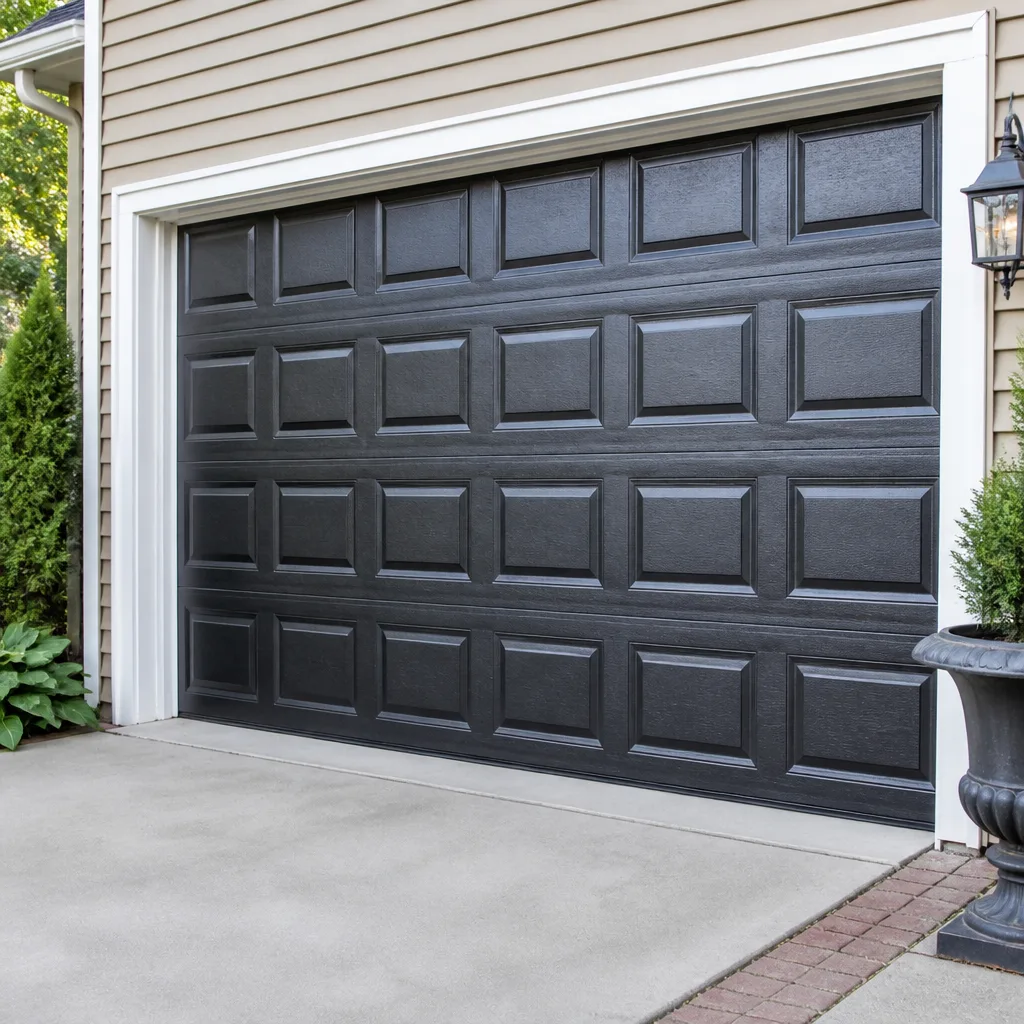 Raised-panel steel
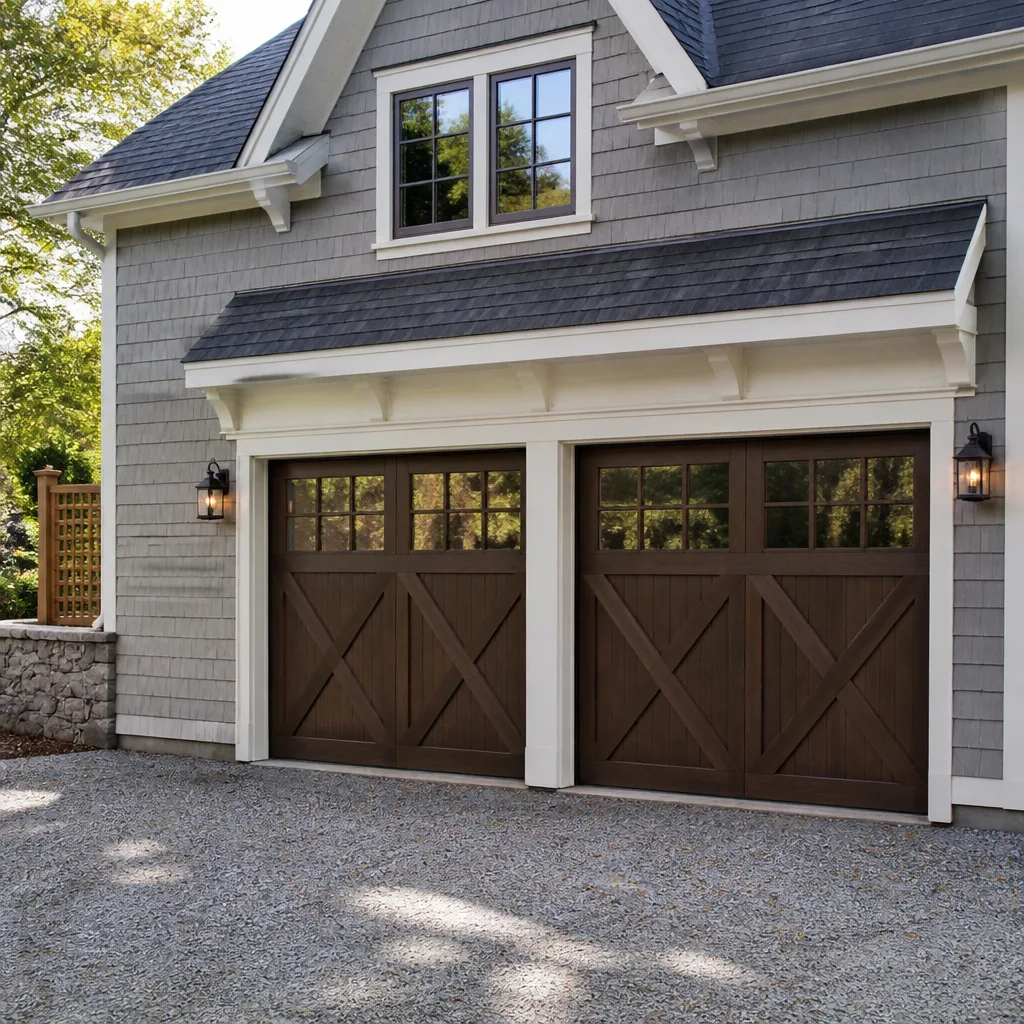 Carriage house
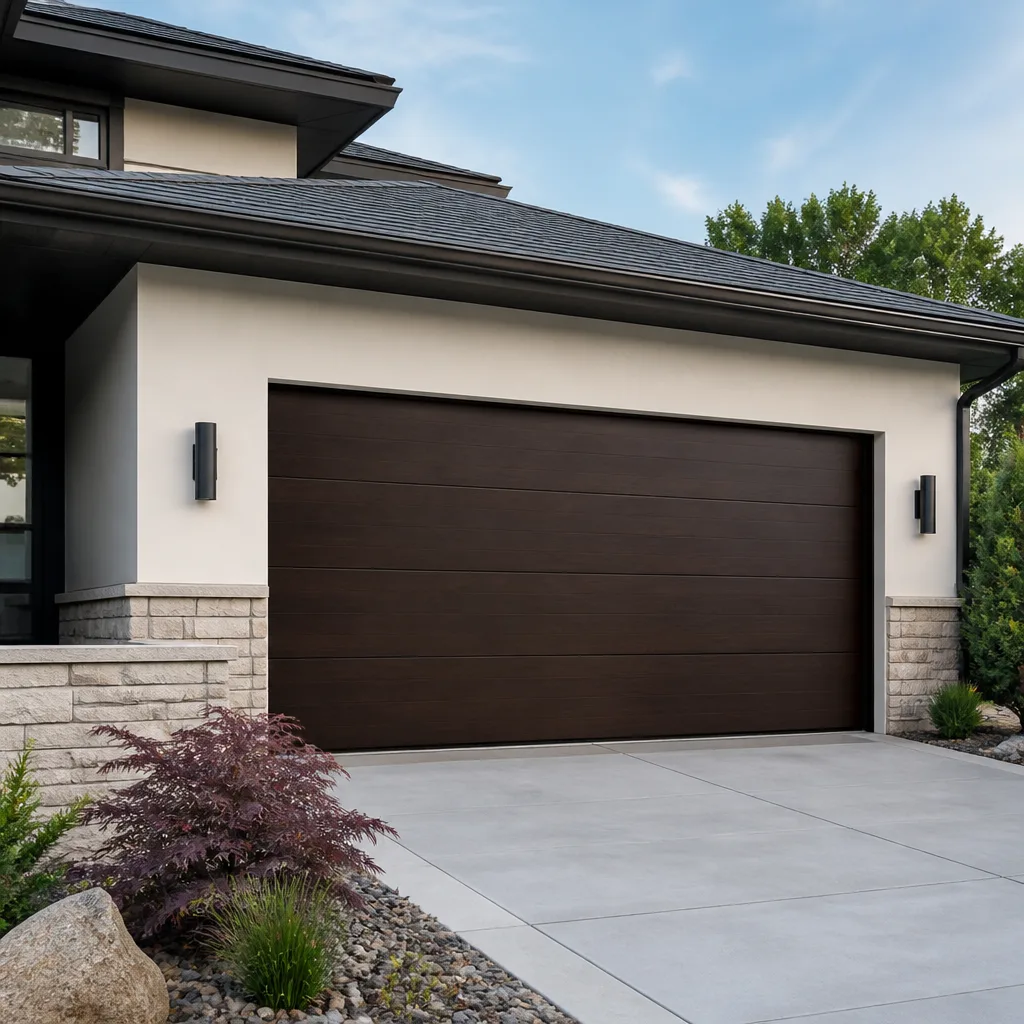 Modern flush
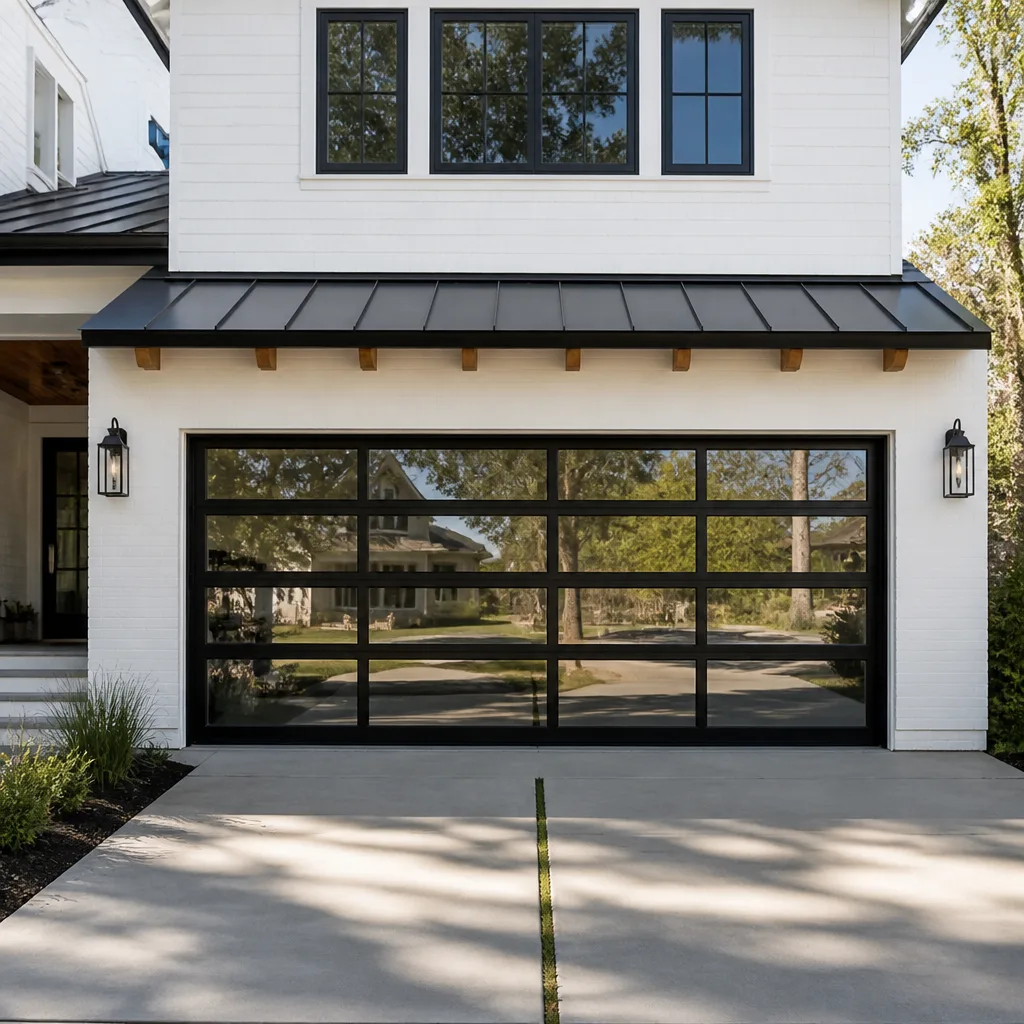 Full-view glass
 LiftMaster openers
 Chamberlain openers
Full 25-point door and opener safety check with every visit - springs, cables, rollers, tracks, and your LiftMaster or Chamberlain opener included
You get a price before we start. It does not change when the pro arrives.
Get your free estimateHow to Hire a Garage Door Contractor in Flatbush: A Step-by-Step Guide
There’s no licensing category called “garage door contractor” in New York. That single fact explains most of the bad experiences homeowners have with this trade. Anyone with a van and a wrench can print the title on a business card, and the difference between them and a specialist doesn’t show up until a spring is under tension or an opener won’t learn a new remote. This guide teaches you how to tell them apart before anyone rings your doorbell. You’ll learn what to ask, what a proper written estimate looks like, how to verify insurance, and the red flags that show up in a contractor’s communication long before they show up in your garage. It’s written from Flatbush, for Flatbush, and it’s the same filtering process we’d want a neighbor to use.
Quick Answer
Hire a garage door specialist by verifying three things in this order: proof of liability insurance with a current Certificate of Insurance, a written itemized estimate that separates labor from parts, and answers to brand-specific technical questions only someone who works on garage doors daily can give. Skip anyone who can’t produce all three before the job starts, no matter how good the price looks. The cheapest quote is usually the one that changes after your door is already off its tracks.
Styles & brands we work with
- Raised-panel steel
- Carriage house
- Modern flush
- Full-view glass
- LiftMaster openers
- Chamberlain openers
Table of Contents
- Why a Garage Door Specialist Is Different From a Handyman
- The Questions Only a Real Specialist Can Answer
- How to Structure Your Quote Request to Prevent Bait-and-Switch
- How to Verify Insurance and Liability Coverage in New York
- Red Flags in How a Contractor Communicates
- What a Written Estimate Should Include, Line by Line
- The Step-by-Step Hiring Process
- Brand Knowledge: Why It Matters in a Flatbush Home
Why a Garage Door Specialist Is Different From a Handyman
A garage door is the largest moving object in your home, and it’s held in balance by torsion or extension springs under serious tension. A handyman who’s comfortable with drywall and faucets is working outside his training when he touches that system. The failure modes are not cosmetic. A spring that lets go while someone is standing under it can cause serious injury, and a door that comes off its track can drop a 150-pound panel onto whatever is beneath it. That’s why garage door service is a specialist trade, not a general repair category.
What separates the two comes down to four practical differences:
- Tooling built for the job. Torsion springs are wound with specific rods and a winding bar, and the door has to be held properly while the tension transfers. A generalist doesn’t carry that gear and often won’t attempt the work at all.
- Brand-specific parts knowledge. Openers from Genie and LiftMaster use different logic boards, travel limits and safety-reverse systems. Doors from Clopay, Amarr and Wayne Dalton have their own panel profiles and hardware. A specialist knows the actual hardware in your home instead of working around it.
- Diagnosis speed. An experienced garage door technician can usually tell within minutes whether a door is binding, misaligned, or fighting a failing spring. A generalist works by elimination, which costs you time and money.
- Full-system coverage. The door and the opener are one system. A specialist handles both, so you’re not calling a second vendor when the opener turns out to be the actual problem.
In Flatbush, the housing stock makes this matter more than in newer suburbs. Many of the homes here have older one-car garages with manual locks or retrofitted openers, and the door hardware on those setups is often a mix of original parts and later replacements. Reading that mix correctly takes hands-on familiarity with several manufacturers at once, which is exactly the kind of thing a generalist can’t fake for long.
The Questions Only a Real Specialist Can Answer
The fastest way to separate a specialist from someone who added “garage doors” to a listing is to ask two or three technical questions before you book. You don’t need to know the answers yourself. You just need to listen for whether the response is specific or vague. Someone who does this work daily answers immediately. Someone who doesn’t tends to pivot to price or offers to “take a look first.”
Here are the questions worth asking, in order:
- “How do you size a replacement torsion spring?” A real answer involves measuring the wire gauge, the inside diameter, and the length of the spring, then matching the cycle rating to the door’s weight. A vague answer is “we bring a few sizes and see what fits.” The second response is how a door ends up with the wrong spring and a short service life.
- “What’s the difference between torsion and extension springs, and which does my door use?” Torsion springs mount above the door on a shaft; extension springs run along the sides. They’re replaced differently and they fail differently. Anyone who can’t tell you which system your door has before arriving isn’t prepared for the job.
- “How do you set the torque or force limits on an opener?” Every opener brand has its own procedure for setting travel and force limits, and LiftMaster, Chamberlain, and Genie each handle it differently. A specialist can describe the process for your specific unit.
- “Can you service my brand?” Name your opener and door brands directly. If you have a Wayne Dalton door and a Genie opener, ask about both. A specialist will confirm without hesitation. A generalist will hedge.
- “What’s the safety-reverse test, and will you run it before you leave?” Every opener has a safety-reverse function that should be tested after any adjustment. A technician who volunteers this without prompting is one who takes the job seriously.
You don’t need to interrogate anyone. Two or three of these questions told to a dispatcher, with a follow-up to the technician who arrives, will tell you everything you need to know. If the answers are specific and calm, you’re dealing with someone who’s done the work. If they’re defensive or evasive, you’ve saved yourself a bad afternoon.
How to Structure Your Quote Request to Prevent Bait-and-Switch
The lowest quote is often the one that grows after the work begins. This isn’t always dishonesty; sometimes it’s a contractor who quoted without looking closely. But the pattern is predictable: a low number over the phone gets someone to your door, and then the spring turns out to be “the heavy-duty kind,” the cable “needs replacing while we’re in there,” and the price doubles. You can prevent most of this by how you ask for the quote.
Structure your request like this:
- Give the full description up front. Door size, door material, opener brand and model, and a photo of the spring assembly if you can get one. The more accurate your description, the more accurate the quote.
- Ask for the quote in writing, itemized. Labor and parts on separate lines. If a contractor refuses to itemize, that’s information. Move on.
- Ask what could change the price. A good contractor will tell you. “If the cable is frayed or the bearing plate is worn, that adds to the job.” The honest answer includes contingencies. The dishonest answer is “nothing, this is the price.”
- Ask for the part brands in advance. If a spring or opener replacement is on the table, ask which manufacturer’s part they’ll use. “We’ll use whatever’s on the truck” is a red flag; “we use [specific brand] springs matched to your door weight” is not.
- Get two or three quotes and compare line by line. Don’t just compare totals. The quote that looks cheaper on paper often has a vaguer scope and a higher chance of a surprise charge.
- Confirm in writing that the final price won’t exceed the quote without your approval. This one sentence, asked before the job, closes most of the bait-and-switch gap.
One more point specific to garage door work: unless the issue is something a technician can see in a photo, phone quotes are inherently rough. A real specialist will tell you that and offer a free on-site estimate. For flat-rate jobs like a garage door repair, the price is set per job by the written estimate after the technician sees the door. Anyone who promises a firm price sight unseen is either guessing or planning to revise it.
For installation and replacement jobs, the process is different. A proper installer needs to measure the opening, confirm the ceiling height and headroom, and check the clearance for the door’s travel before quoting. That’s why garage door installation is quoted after a free measure, not over the phone. You’ll get a written price before anything is ordered or scheduled.
How to Verify Insurance and Liability Coverage in New York
A verbal “we’re insured” is worth nothing. In New York, general liability insurance for a contractor is verifiable with a Certificate of Insurance, usually called a COI, issued by the insurer and listing the policyholder, the coverage amounts, and the policy period. Ask for it before the job is scheduled, and read it. If a contractor can’t produce one, don’t let them work on your property, regardless of the price.
What to check on the COI:
- The business name matches. The name on the certificate should match the name on the estimate. Mismatches are a warning sign.
- The coverage is current. Check the policy period. An expired certificate protects no one.
- General liability is listed. This covers property damage and third-party injury, which is what matters when a door panel comes loose.
- Workers’ compensation is listed if the contractor has employees. In New York, most employers are required to carry it. If someone is injured on your property and there’s no coverage, the exposure can follow you.
- The policy covers the type of work. Some policies exclude certain categories of work. Ask if garage door service is covered under the policy.
Why does this matter for garage doors specifically? Because the work involves spring tension, heavy panels, and ladders, all of which put people and property at risk. The failure mode isn’t just a door that doesn’t work; it’s a door that fails while someone is standing under it. A specialist will have no problem producing a COI. A generalist working without insurance will stall, change the subject, or offer to “cut you a deal” in exchange for skipping the paperwork.
One more verification step: ask whether the company uses subcontractors. Some do, and if a subcontractor shows up on your property, the COI should be from the subcontractor’s policy, not the company that took your call. If the company can’t tell you who’s actually coming, that’s a sign to look elsewhere.
Red Flags in How a Contractor Communicates
Most hiring mistakes happen before the truck pulls up. The way a contractor communicates on the phone and in writing tells you almost everything about how they’ll handle the job. In our experience, the following patterns show up again and again in the calls we get from homeowners who hired someone else first:
- Vague scope. “We’ll fix the door” is not a scope. A real quote says what’s being repaired or replaced and what isn’t. If you can’t tell from the quote what they’re going to do, they either don’t know or don’t want you to.
- Refusal to itemize. Labor and parts on separate lines is standard practice. A contractor who won’t itemize is either hiding the labor cost or planning to swap in cheap parts.
- Pressure to decide immediately. Garage door problems are urgent, but not so urgent that you can’t take ten minutes to think. A contractor who pushes you to book on the spot is pushing for a reason, and it’s not your convenience.
- No callback number listed on the estimate. Any legitimate business puts a phone number on its written quote. If it’s missing, that’s a warning.
- Cash-only, no receipt. Cash isn’t automatically a problem, but a refusal to provide a written receipt is. You should have documentation of every job done on your home.
- Quotes that ignore your brand. If you tell them you have a Clopay door and they don’t ask a single follow-up question, they probably aren’t planning to install genuine Clopay parts. The right brand match matters for panel fit, spring sizing, and warranty coverage.
- Refusal to run a safety-reverse test before leaving. Any garage door adjustment should end with this test. A technician who doesn’t do it has left you with an opener that could close on a person or a pet.
One more that’s specific to Flatbush: a contractor who lives far outside the area and can’t name a single neighborhood here is probably not going to come back if something goes wrong. The person who can tell you the difference between the doors and driveways in Flatbush and the ones closer to Prospect Park is more likely to be around when you need a callback.
What a Written Estimate Should Include, Line by Line
A proper written estimate for a garage door job in Flatbush should be specific enough that you could hand it to a second contractor and have them understand exactly what’s being done. If it reads like a receipt from a coffee shop, it’s not a real estimate. Here’s what each section should contain:
- Job description. What specifically is being repaired or replaced. “Replace two torsion springs, one matched pair sized to the door weight” is specific. “Spring repair” is not.
- Parts list with brands and model numbers where applicable. If a spring is being replaced, the quote should list the wire gauge and length, not just “spring.” If an opener or door panel is being replaced, the brand and model should be on the quote.
- Labor line, separate from parts. This is where the itemization becomes useful. You’ll see exactly what you’re paying for the install versus the hardware.
- Estimated time on site. A straightforward spring replacement is usually a short job; a door or opener install is longer. The estimate should say which.
- What’s not included. If the quote doesn’t cover cable replacement, bearing plates, or opener adjustment, it should say so. This line alone prevents most disputes.
- Payment terms. When payment is due, what forms are accepted, and whether a deposit is required. A deposit is normal for a full installation because the door has to be ordered; a demand for full payment up front on a repair is not.
- Contact information and a phone number. The estimate should have a callback number that goes to a person who can answer questions about the job.
- Signature line. A written estimate should be approved and signed before work starts. This protects both sides.
For a full installation, the estimate should also note that the price is set after the free measure, since header conditions and ceiling height can’t always be confirmed over the phone. For an opener job, it should name the opener brand and confirm whether the door’s safety sensors are being replaced or reused. A specialist would include these details unprompted; a generalist usually won’t include them at all.
The Step-by-Step Hiring Process
Here’s the sequence in order. Done properly, it takes an afternoon, and it saves you from the most common and most expensive hiring mistakes.
- Describe the problem in writing. Note what the door is doing: won’t open, opens unevenly, makes a loud bang, opener hums but doesn’t move the door, remote doesn’t work. Include the door and opener brands if you can read them off the equipment.
- Call two or three contractors and ask the specialist questions. Use the questions in the section above. Listen for specifics, not reassurance.
- Ask for a COI before scheduling. Read it. Confirm the name matches, the policy is current, and general liability is listed.
- Ask for the written estimate. Itemized. Labor and parts separate. What’s not included stated explicitly.
- Confirm the price won’t change without your approval. Get this in writing if you can, or at minimum confirm it verbally and note it on the estimate.
- Schedule the job. For repairs, book the earliest opening. For installations, book the free measure first, then the install date once the written price is in hand.
- Walk the job when it’s done. Verify the door opens and closes smoothly, the opener is set up properly, the safety-reverse test was run, and the written receipt matches the agreed price.
- Keep the estimate and receipt. If a warranty question comes up later, you’ll want the paperwork.
For urgent situations, skip ahead to step three but keep the rest. A snapped spring or a door stuck in the open position is a security and safety issue, and garage door repair done as an emergency still has to be done by someone insured and competent. If the door won’t close and the house is exposed, that’s when same-day service matters most, and a specialist will tell you honestly whether the job can be done that day or needs to be secured first.
Brand Knowledge: Why It Matters in a Flatbush Home
Garage door hardware is not interchangeable across brands, and the differences show up in ways you’ll notice months after the job. The spring has to be sized to the actual door weight, and door weight varies by manufacturer and panel configuration. The opener’s travel and force limits have to be set to the specific unit. When a technician knows Genie and LiftMaster logic boards, Wayne Dalton and Amarr panel profiles, and Clopay hardware, the job goes faster and the result lasts longer. When they don’t, the job gets forced into a shape that works “well enough.”
This is where a garage door specialist earns the trust. We work on all eight leading brands: LiftMaster, Chamberlain, Genie, Clopay, Amarr, Wayne Dalton, Craftsman, and Raynor. That matters for a specific reason. If you have a Wayne Dalton door and a Genie opener, and your garage door opener repair turns out to be a travel-limit problem that’s putting strain on the door, a technician who knows both systems can address the actual cause rather than replacing parts until the symptom goes away. Our technicians have up to 14 years of experience, and that experience is what lets them work on the hardware in your home instead of improvising around it.
Before you hire anyone, ask what brands they actually service. The answer tells you whether they’ve built their work around this trade or added it to a list.
Common Mistakes to Avoid
- Hiring on price alone. The lowest quote is usually the one with the least specific scope. If you can’t tell from the quote what’s being done, the price isn’t real. Compare quotes line by line, not total to total.
- Accepting “we’re insured” without the COI. A verbal assurance is not coverage. Ask for the certificate, read it, and confirm the policy period and business name.
- Not asking about brand expertise. A generalist who doesn’t ask about your door or opener brand before the job isn’t planning to install brand-matched parts. In Flatbush, where many homes have mixed-brand setups, this matters more than it does in newer construction.
- Not getting the quote in writing. A phone quote is a starting point, not a price. The written estimate is the price, and it should list labor and parts separately.
- Skipping the safety-reverse test. Any adjustment to the opener or door should end with this test. If the technician doesn’t run it, ask them to before they leave. It’s the difference between an opener that protects your family and one that doesn’t.
- Letting the technician substitute parts without asking. If the quote says one brand of spring and the truck has another, that’s a conversation to have before the work starts, not after.
- Trying to fix the spring yourself. Torsion springs are under serious tension and the failure is not graceful. There’s no safe DIY version of this repair. Call a trained professional.
See the difference
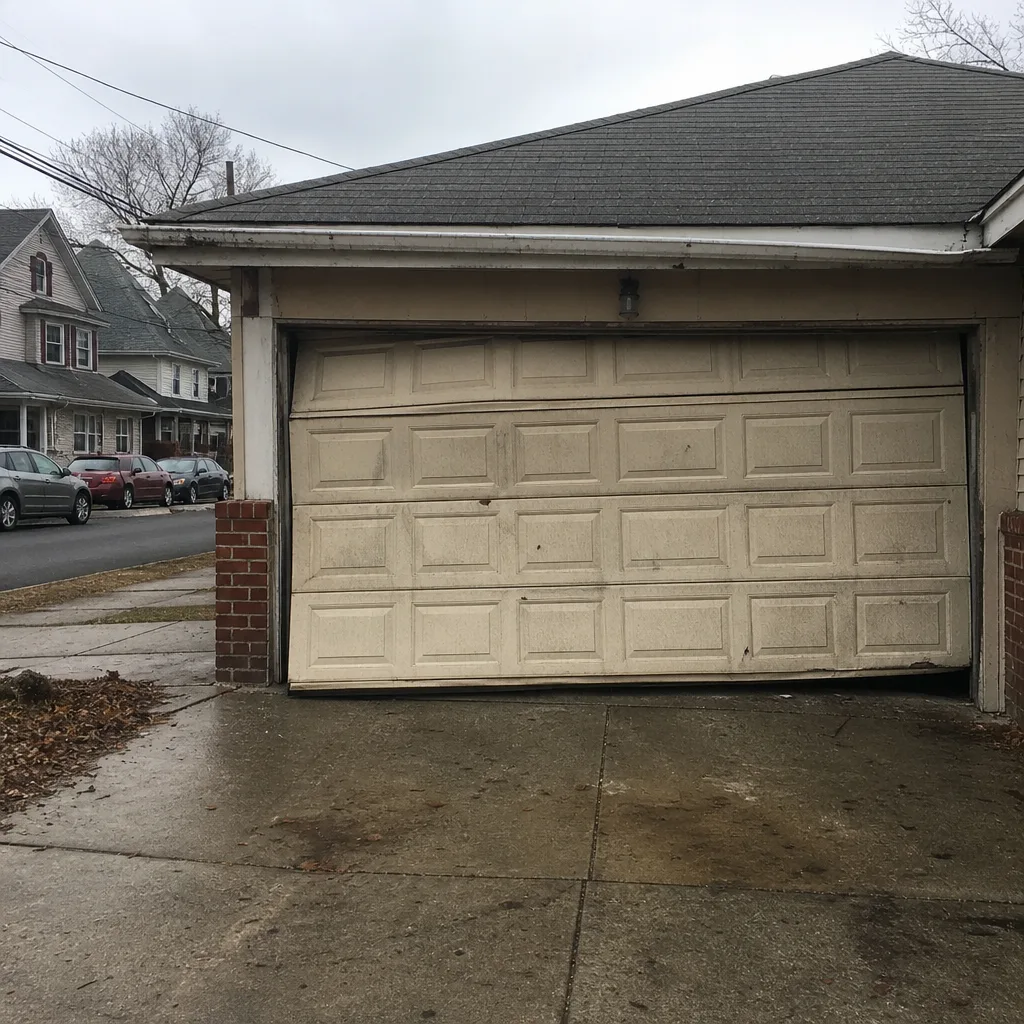 Before
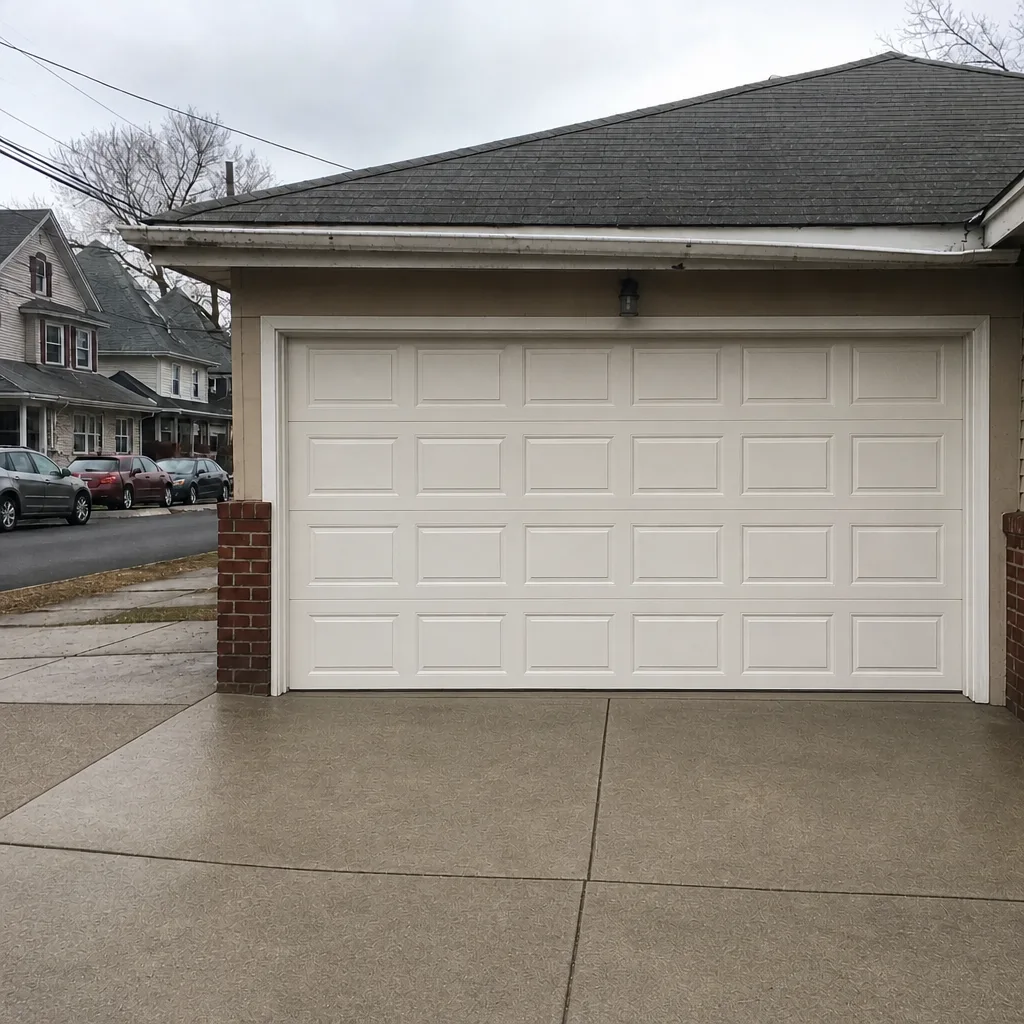 After
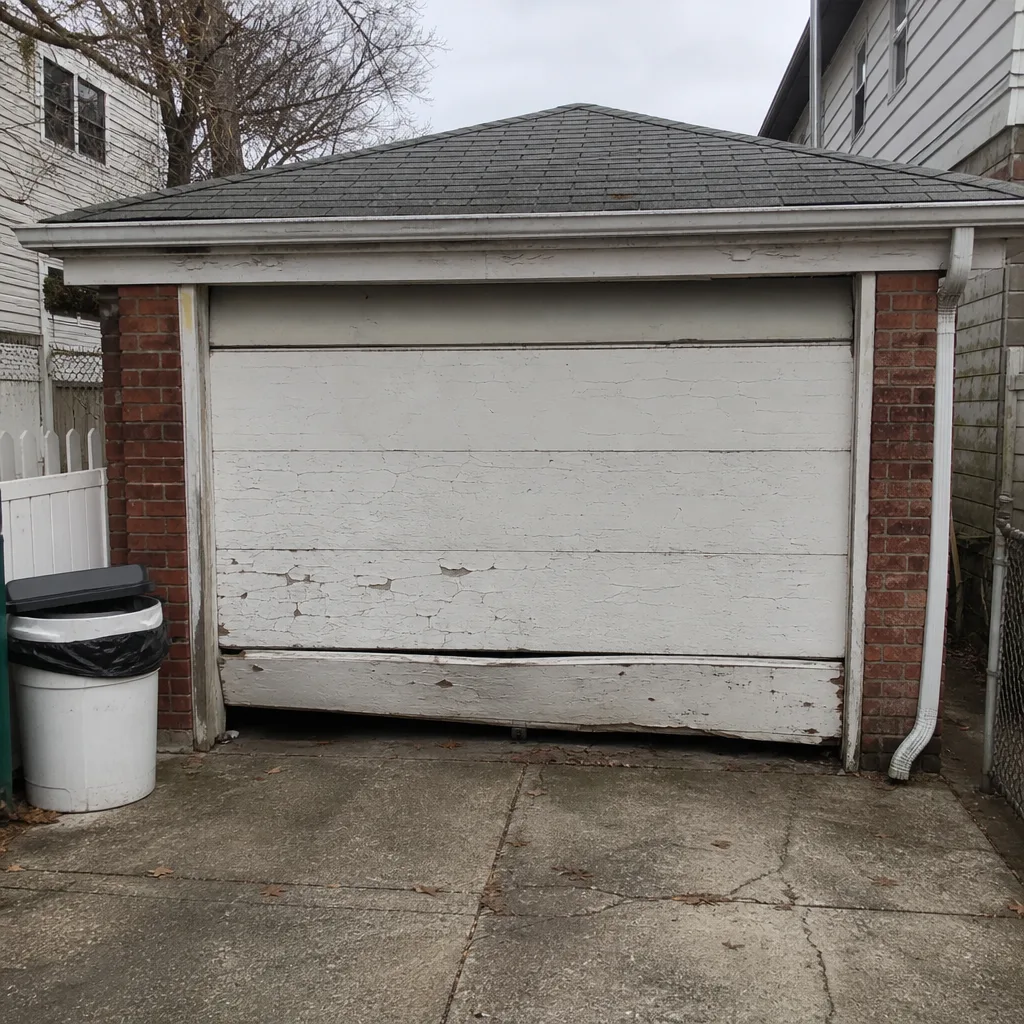 Before
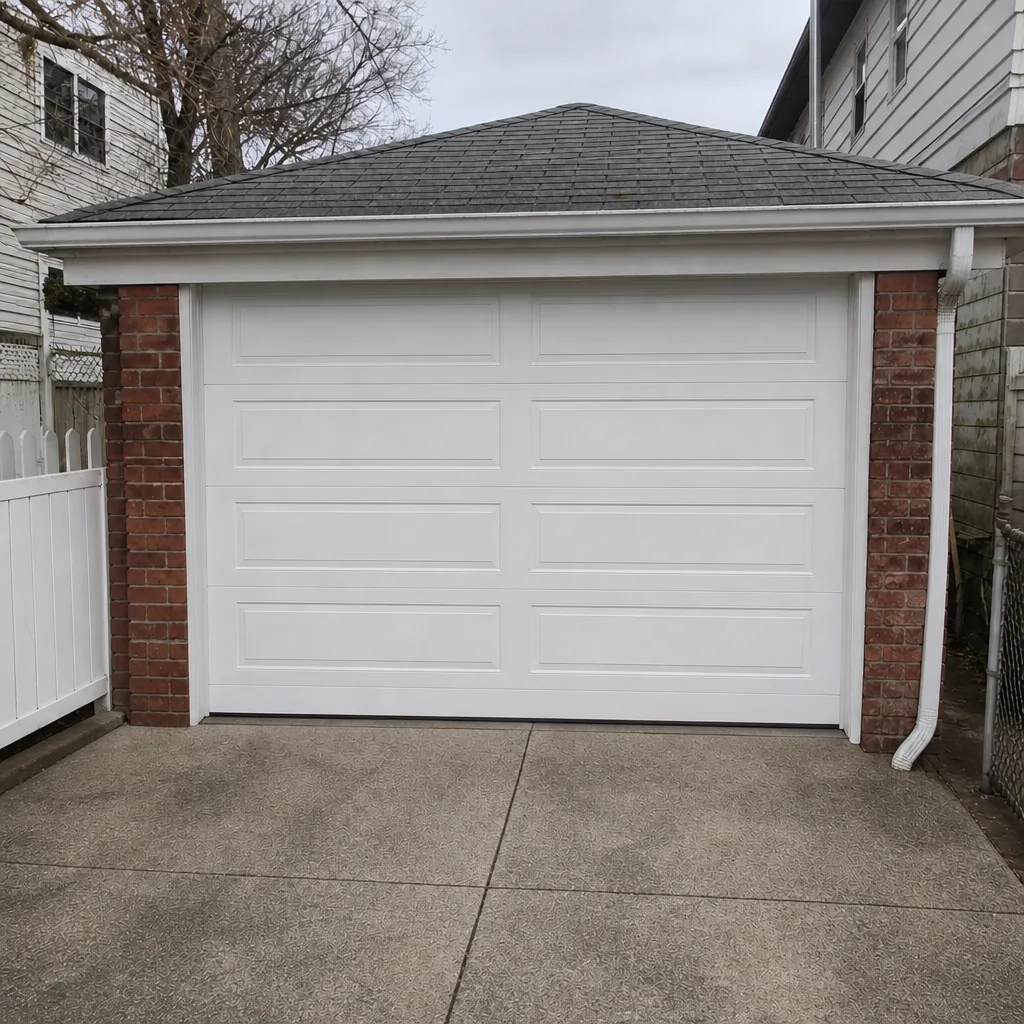 After
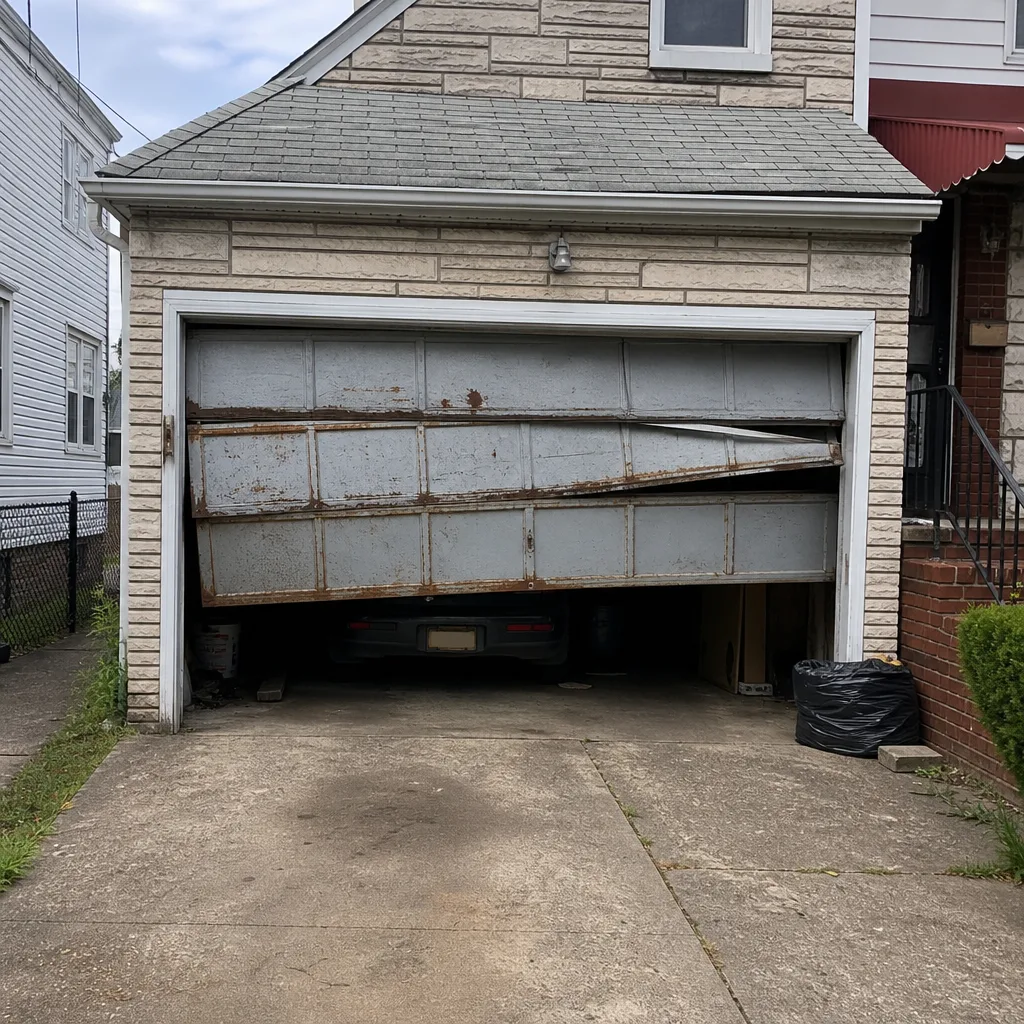 Before
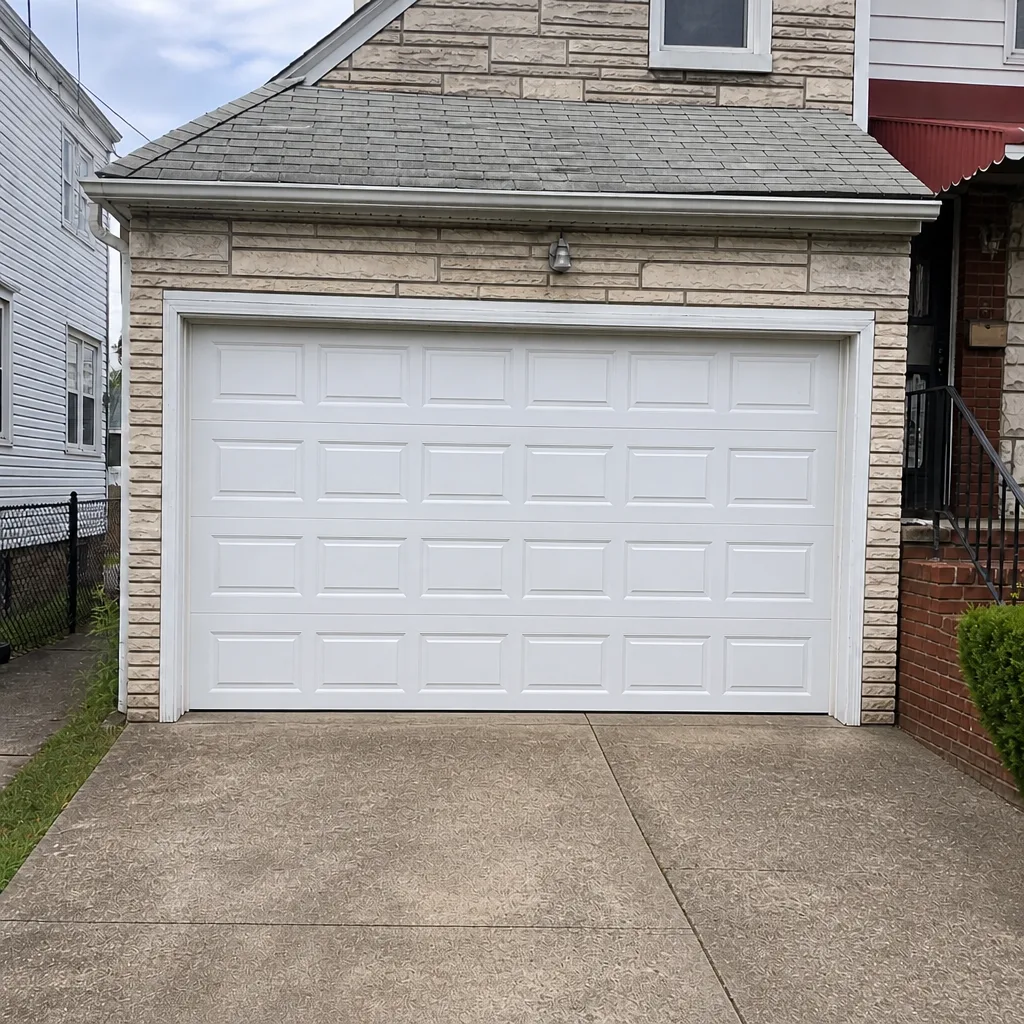 After
When to Call a Professional
Some garage door problems are genuinely urgent and some aren’t. The following scenarios should get a call: the door won’t open or close at all and your car is trapped inside; you heard a loud snap from the spring assembly and the door now feels extremely heavy; the door has come off its track or is hanging unevenly; the opener runs but doesn’t move the door, or moves it with a grinding noise; the safety-reverse test fails and the door closes on objects in its path; or the door won’t close and the house is exposed. In each of these cases, the risk of waiting is higher than the cost of a service call, and a trained technician is the right person to evaluate it. For anything involving the spring, cable, or opener electronics, don’t test it yourself. Garage Door Repair Flatbush offers free estimates in Flatbush; call (855) 765-9251 and we’ll tell you what the job involves.
Frequently Asked Questions
Garage door repair in Flatbush is priced per job from a written estimate, so the number depends on what’s actually wrong. Spring replacements, opener repairs, and cable or roller work each have their own typical range, and the estimate sets the final price before any work starts. Call (855) 765-9251 for an exact quote. Estimates are free.
No. New York doesn’t have a specific license category for garage door contractors, which is exactly why you should verify insurance and ask technical questions rather than rely on a license number. The absence of a licensing requirement is the reason this guide focuses on the questions only a genuine specialist can answer, brand-specific knowledge, and a written Certificate of Insurance. Those are the real filters.
In most cases, yes for a repair, and a snapped spring is the kind of job a specialist will prioritize because a door with a broken spring is a safety and security issue. Call (855) 765-9251 and we’ll tell you what the next available opening looks like. We answer 24/7. Fast dispatch from 7am to 7pm, Sunday through Friday. For installations and full replacements, the job is scheduled after a free measure, since the door has to be ordered.
Not without your approval. The written estimate is the price, and any change has to come from something the technician didn’t see over the phone, like a worn cable or bearing plate. A reputable contractor will tell you what could change the price in advance and get your approval before adding to the bill. If the price moves without your agreement, that’s a contractor you shouldn’t be using.
We work on all eight leading brands: LiftMaster, Chamberlain, Genie, Clopay, Amarr, Wayne Dalton, Craftsman, and Raynor. That covers openers, doors, springs, and the hardware on both. If you’re unsure what’s installed in your garage, we can identify it during the free estimate and tell you exactly what parts are needed.
You ask what parts they’ll use before the job and confirm that the parts are listed on the written estimate. A brand-specific estimate that names the spring size, opener model, or door panel leaves no room for substitution. If the brand isn’t on the estimate, ask for it to be added before you sign. This is also why asking what brands they service matters: a specialist who works with Genie, Clopay, and Amarr hardware regularly isn’t going to substitute a brand they don’t carry.
The Bottom Line
The biggest hiring mistake Flatbush homeowners make isn’t choosing the wrong company; it’s not knowing how to tell one from another. There’s no garage door license in New York, so the filter has to come from you. Verify the Certificate of Insurance, not the verbal assurance. Ask the technical questions only a specialist can answer, like spring sizing and opener travel limits. Get an itemized written estimate, confirm the price won’t move without your approval, and check the parts brands before the job starts. Then compare quotes line by line instead of total to total. Do that and the cheap quote with the vague scope stops looking cheap. For a free estimate and a straightforward conversation about your door, call Garage Door Repair Flatbush at (855) 765-9251. We answer 24/7. Fast dispatch from 7am to 7pm, Sunday through Friday.
Written by the team at Garage Door Repair Flatbush.